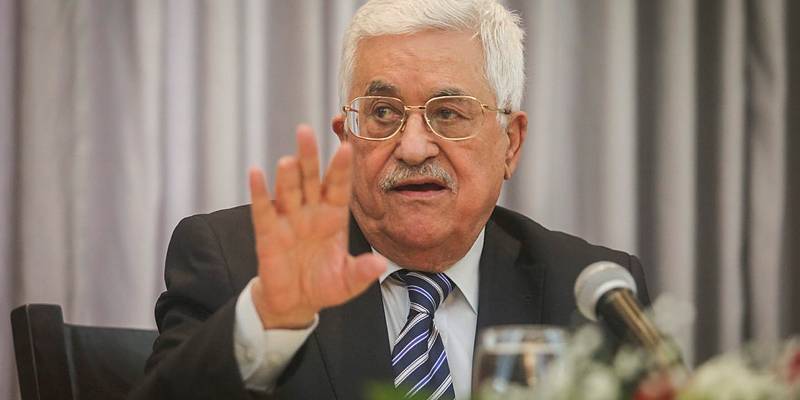
Police are investigating an assault that took place Thursday night on Yefet Street in the city of Yaffo, where a rabbi affiliated with the Yaffo Hesder Yeshiva was attacked while walking in the area. Authorities said the victim sustained light injuries and was taken for medical treatment.
According to a police statement, officers were dispatched after receiving a report of the incident. “The police received a report of an assault of a man on Yefet Street in Yaffo. Police forces arrived at the scene and searched for the suspected assailant. The victim was taken for medical treatment with light injuries. The circumstances of the incident are under investigation.”
After receiving medical care, the rabbi filed a complaint with the police detailing what happened during the attack.
Moshe Shendovsky, the executive director of the yeshiva, described the incident in an interview with Arutz Sheva-Israel National News. “The rabbi wanted to get into his car, and then an Arab punched him twice in the face, threw him to the ground, cursed at him, and fled. We want personal security, so that Jews can walk around Yaffo freely and without fear, that the police will be present, and that the municipality will unequivocally condemn the incident.”
In a separate statement, the yeshiva called on city and law enforcement officials to take decisive action. “We call on the Tel Aviv Police and the leaders of the city of Tel Aviv-Yafo to act with full force to ensure the safety and security of the city’s Jewish residents in Yaffo.”
The attack is being treated as a suspected antisemitic incident, and the investigation remains ongoing as police continue efforts to locate the assailant.
{Matzav.com}

 Matzav
Questions about President Trump’s health resurfaced this week following a wide-ranging interview in which he pushed back sharply against renewed scrutiny and insisted there is nothing wrong with him.
“Let’s talk about health again for the 25th time,” Trump said at the outset of the conversation, according to the Wall Street Journal. “My health is perfect.”
Speculation about the president’s physical condition has circulated throughout the first year of his second term, fueled largely by photographs showing dark bruising on his hands. The White House has previously attributed the marks to frequent and forceful handshaking, along with Trump’s long-standing use of aspirin.
Addressing the issue directly, Trump said the bruising stems from taking more aspirin than his doctors advise, a routine he said he has followed for decades. He explained that he has done so for 25 years because “I’m a little superstitious.”
The president also expressed regret over undergoing an MRI during a medical checkup in October at Walter Reed National Military Medical Center, saying the test itself sparked unnecessary speculation. “I would have been a lot better off if they didn’t, because the fact that I took it said, ‘Oh gee, is something wrong?’” Trump said. “Well, nothing’s wrong.”
In July, the White House disclosed that Trump had been diagnosed with chronic venous insufficiency, a circulation condition that has caused swelling in his lower legs. Trump confirmed that he briefly tried wearing compression socks as part of the treatment but abandoned them, saying, “I didn’t like them.”
At 79, Trump is already among the oldest individuals to serve as president. If he completes his term, he would leave office as the oldest man ever to hold the position, edging past the mark set by Joe Biden, who dropped out of his reelection campaign amid mounting concerns over cognitive decline.
{Matzav.com}

Chareidi troops of the Israel Defense Forces’ Chashmonaim Brigade were deployed to the security zone in southern Syria for the first time, the military said on Thursday.
Following military exercises in the area, the chareidi infantrymen carried out targeted searches, “during which they gathered intelligence with the aim of removing threats and ensuring the security of the civilians of the State of Israel, and in particular the residents of the Golan Heights.”
The chareidi brigade operated under the command of the 401st Brigade’s 52nd Armored Battalion and alongside the 474th Brigade, it said, adding that the 210th “Bashan” Division remains deployed in the region.
The Chashmonaim Brigade “will continue to operate across all arenas,” the IDF statement added, vowing to allow all “chareidi soldiers to maintain their way of life.”
After the fall of the Assad regime in December 2024, the IDF seized control of parts of southern Syria, expanding a buffer zone and maintaining a presence amid ongoing clashes and strikes.
Prime Minister Bibi Netanyahu has said that while Israel remains ready to negotiate a new security deal with Damascus, it will “stand by its principles” to prevent a repeat of Hamas’s Oct. 7, 2023, massacre.
“After Oct. 7, we are determined to defend our communities along our borders, including the northern border,” the prime minister declared.
Israel’s policies are aimed at “preventing the entrenchment of terrorists and hostile activities against us, protecting Druze allies and ensuring that the State of Israel is safe from ground or other attacks,” he added.
Syrian President Ahmed al-Sharaa, a former Al-Qaeda terrorist who also went by the nom de guerre Abu Mohammad al-Jolani, has demanded a full return to the 1974 Disengagement of Forces Agreement that ended the 1973 Yom Kippur War and an Israeli withdrawal from the expanded buffer zone.
The U.N. Security Council on Monday renewed the mandate for a long-standing peacekeeping force along the Israel-Syria border through the end of June 2026.
The force, which operates from the Israeli-controlled Golan Heights, was established by the 1974 agreement. UNDOF has a mandate to maintain the ceasefire and supervise the buffer zone inside Syrian territory.
U.S. President Donald Trump said Washington and Israel “have an understanding regarding Syria,” while declining to elaborate, as he hosted Israeli Prime Minister Bibi Netanyahu in Florida on Monday.
Al-Sharaa “has been with us all the way,” said the president, adding that “I’m sure that Israel and him will get along,” and “I will try and make it so that they do get along.” JNS
{Matzav.com}

The Israel Defense Forces is expediting preparations for a multi-front war with Iran in light of the internal unrest in the Islamic Republic, Hebrew media reported.
The preparations, which are part of the military’s multi-year plan extending roughly to 2030, anticipate conflict involving Iran, Lebanon and Judea and Samaria, according to Israel’s Channel 12 News.
A senior Israeli official told the outlet that while Israel was refusing to comment on the protests in Iran, which entered their fifth day on Thursday, the political echelon sees it as a “dramatic event.
“It is too early to know the consequences,” the official told the outlet.
The report said that Israeli Prime Minister Bibi Netanyahu held “discussions and consultations” regarding the demonstrations during his visit to the United States, which is scheduled to end on Thursday.
The IDF’s developing war plans reportedly include the possibility that the Islamic regime’s leaders will decide to attack the Jewish state to prevent their overthrow at the hands of the Iranian people.
A large-scale “surprise war” with Tehran and its regional terror proxies could for the first time also include Israeli attacks “in and from” outer space, according to the report.
Netanyahu told Newsmax on Tuesday that Iran’s leaders have “robbed their people of the future” and that change would “come from within.”
“It’s up to the Iranian people, and we understand what they’re going through, and we’re very sympathetic to them,” he told the channel.
The regime’s leadership is cracking down on expressions of widespread dissent over the country’s spiraling economic crisis, which has left the national currency at an all-time low of 1.4 million rials to a U.S. dollar.
Iran International reported that the crackdown on protesters continued on Thursday morning, with regime forces opening fire and deploying tear gas at Tehran’s central fruit and vegetable market.
Iranian authorities confirmed on Thursday that a member of the Basij, a paramilitary force within Tehran’s Islamic Revolutionary Guard Corps, was killed during a rally in the country’s western Lorestan province.
The Basij member was “martyred … at the hands of rioters during protests in this city in defense of public order,” a local official said. Another 13 Basij members and police officers reportedly suffered injuries.
A government building in the country’s south was also vandalized by demonstrators on Wednesday, Iranian authorities told local media.
Iran has seen repeated waves of protests since 2009 over a host of issues, including the religious oppression practiced by its theocratic rulers. The latest have reportedly become the biggest protests since 2022, when the death of Mahsa Amini, 22, in regime custody triggered mass rallies.
Ali Shamkhani, an adviser and representative of Supreme Leader Ali Khamenei, earlier this week alluded to an attack in the wake of the meeting between Netanyahu and U.S. President Donald Trump.
“Under Iran’s defense doctrine, some responses are determined even before the threats reach the implementation stage,” Shamkhani wrote in Hebrew on X. He added: “Iran’s missile and defense capabilities are uncontrollable and do not require authorization. Any aggression will be met with a severe, immediate, and unexpected response.”
It appeared shortly after Trump said he would “knock the —- out of” Iran if the regime attempted to rebuild nuclear sites targeted in June. JNS
{Matzav.com}

Dear Matzav Inbox,
Every year, our community celebrates thousands of chasunos. Baruch Hashem, it’s a simcha — or at least it’s supposed to be. But right after the music stops and the sheva brachos end, reality hits hard: Where are these young couples eventually supposed to live?
This is not a “housing demand” problem. Demand is obvious. Demand is predictable. Demand is built into the very fabric of a growing frum community. We know exactly how many couples are getting married every year. This didn’t sneak up on us.
The problem is supply. The problem is affordability. And the problem is that we are thinking far too small and moving far too slowly.
One lakefront project here, one glossy brochure there — and everyone pats themselves on the back as if the crisis has been “addressed.” It hasn’t. Not even close.
If a single development adds a few hundred units, but the community is growing by thousands of families every year, what exactly do we think is happening? Basic math isn’t anti-frum. It’s reality. If we need housing for 2,000–3,000 new families annually and we build housing for 300, we aren’t solving a problem. We’re falling further behind.
And affordability? Let’s be honest. “Affordable” has become a word we throw around without meaning it. When starter homes are pushing $600,000, $700,000, or more — before renovations, before furniture, before property taxes — that is not affordable for a family, even with help. Especially not in a community where tuition, groceries, health insurance, and basic living costs are already crushing.
There is no affordable place to buy. Not even for a young working couple. Not for people doing everything “right” and still watching the numbers laugh at them.
People say, “They’ll manage.” No, they’re breaking. Parents are draining retirement. Couples are living in impossible situations. Families are packing into apartments and pretending it’s temporary, while knowing deep down it isn’t.
And here’s the part we don’t like to say out loud: If we don’t create real, large-scale, affordable housing — not one project, not two, but ten or more — we will have a real problem.
This isn’t about luxury. It’s not about waterfront views or fancy amenities. It’s about roofs. It’s about dignity.
We need bold thinking. We need speed. We need leadership willing to say, “This is an emergency,” and act like it.
If we keep congratulating ourselves for baby steps while the problem grows by the year, we will look back and wonder how we let it get this bad.
The housing crisis isn’t theoretical. It’s here. And if we don’t start thinking bigger and faster — much bigger, much faster — it’s only going to get worse. Far worse.
N. G.
New York
To submit a letter to appear on Matzav.com, email MatzavInbox@gmail.com
DON’T MISS OUT! Join the Matzav Status by . Join the Matzav WhatsApp Groups by .
The opinions expressed in letters on Matzav.com do not necessarily reflect the stance of the Matzav Media Network.
{Matzav.com}

Matzav
The Israel Defense Forces’ determination to return the last hostage body held by Hamas in the Gaza Strip and disarm the terror group remains absolute, IDF Chief of Staff Lt. Gen. Eyal Zamir said.
The IDF “will not relent” until Israel Police Master Sgt. Ran Gvili receives a proper burial, “concluding the chapter of the return of hostages from Gaza,” Zamir told commanders during a visit to the southern Strip.
In addition, the military’s “determination to disarm Hamas and the rest of the terrorist organizations is absolute,” Zamir continued.
The so-called Yellow Line instituted by the U.S.-brokered ceasefire that went into effect on Oct. 10 and left IDF soldiers in control of more than half of the Strip is “a new security boundary,” according to the chief of staff.
“The Yellow Line is an enhanced defensive line that supports swift operational responses as required. We will continue operating to weaken Hamas as necessary—the troops must remain alert and prepared for developments,” he stated, per the IDF.
“In 2025, the IDF achieved unprecedented accomplishments, foremost among them a severe blow to the Hamas terror group, the dismantling of all its front-line units, the removal of the threat as we experienced on Oct. 7 and the return of all living hostages to their homes,” said Zamir, referring to the Hamas-led invasion of southern Israel on Oct. 7, 2023.
The year ahead will be a “decisive year in shaping the security reality of the State of Israel,” the chief of staff continued, adding that Israel would not allow Hamas “to rebuild its capabilities and threaten us.”
Zamir visited Gaza alongside the head of IDF Southern Command, Maj. Gen. Yaniv Asor, the chief of the Gaza Division, Brig. Gen. Barak Hiram and the commanders of the Golani, 188th and Southern Gaza Brigade.
Soldiers “continue to dismantle terror infrastructure in the area of the Yellow Line in the northern Gaza Strip,” the army said in a separate statement on Wednesday evening.
As part of ongoing ground operations in the Beit Hanoun area, IDF forces found a launcher loaded with five rockets and aimed at Israeli territory, according to the military.
Israeli Prime Minister Benjamin Netanyahu told Fox News on Tuesday that progress toward the next phase of the Gaza ceasefire hinges on Hamas disarming, calling the terrorist group’s refusal to give up its weapons the central obstacle to stabilizing the territory in 2026.
The prime minister told Fox that he believed a different future for Gaza was still possible in the year ahead “if we disarm Hamas, whether with an international force or by any other means.” He added, “If it can be done the easy way, fine. And if not, it’ll be done another way.”
The Palestinian terror organization that murdered some 1,200 people, primarily Jewish civilians, in its Oct. 7, 2023, cross-border assault still has around 20,000 operatives and 60,000 rifles, Netanyahu revealed.
“That’s what disarmament means—got to take all these rifles, take them away from them, and break up those terror tunnels that they have, still hundreds of kilometers of terror tunnels,” the premier told Fox News.
Hamas leader Khaled Mashaal on Dec. 6 repeated calls for Israel’s destruction, rejecting U.S.- and U.N.-backed demands to disarm the Iranian-supported terrorist group and demilitarize the Gaza Strip.
“The resistance and its weapons are the honor and pride of the ummah [the Islamic nation],” Mashaal told an anti-Israel summit in Turkey. “A thousand statements are not worth a single projectile of iron.”
The terrorist leader also dismissed “all forms of guardianship, mandate and re-occupation of the Gaza Strip, the West Bank and all of Palestine,” rejecting another key part of U.S. President Donald Trump’s plan, which received unanimous support of the U.N. Security Council on Nov. 17. JNS
{Matzav.com}

Nick Shirley, a 23-year-old independent journalist, has exposed massive fraud in Minnesota daycare funding and sparked a federal response that froze $185 million overnight. The PBD Podcast speaks to Shirley in the following videos:
WATCH:
{Matzav.com}

The New Year festivities at Mar-a-Lago on Wednesday featured a notable international presence, as Prime Minister Bibi Netanyahu and his wife, Sara, joined the celebrations at the personal invitation of US President Donald Trump and First Lady Melania Trump.
The gathering was especially distinctive in diplomatic terms, as Netanyahu was the sole foreign head of government invited to attend the President’s Gala.
According to those familiar with the event, Netanyahu’s appearance also marked a unique milestone, as he remains the only international leader ever to have taken part in the President’s Gala at Mar-a-Lago.
{Matzav.com}

NEW YORK — A fashion detail from the swearing-in of New York City Mayor Zohran Mamdani has gone viral, with critics focusing on a pair of boots worn by his wife and questioning the mayor’s message on affordability.
Photos and video from the New Year’s Day inauguration circulated widely online, prompting claims that Mamdani’s wife, Rama Duwaji, was wearing luxury leather boots made by Miista, a fashion label whose boots sell for more than $600 a pair. The images quickly sparked backlash on social media, with detractors arguing the footwear clashed with Mamdani’s democratic socialist platform and his calls for rent freezes and higher taxes on the wealthy.
Several commentators used the moment to accuse the mayor of hypocrisy, saying the luxury-brand boots undercut his “everyday New Yorker” image. Others mocked the symbolism of the new mayor taking up residence in Gracie Mansion while promoting aggressive housing and equity policies.
Duwaji, an artist and animator, stood beside Mamdani as he took the oath of office just after midnight, holding the Quran used during the ceremony. Neither Mamdani nor Duwaji addressed the criticism publicly, and there has been no independent confirmation from the mayor’s office regarding the specific model or cost of the boots.
Supporters of the mayor dismissed the controversy as superficial, arguing that focusing on clothing distracts from substantive policy debates and unfairly targets a public official’s spouse.
The episode highlights the intense scrutiny facing Mamdani as his administration begins work on housing affordability, economic equity and other priorities in a deeply polarized political environment.

TEHRAN, Iran — A senior figure in Iran’s Jewish community joined representatives of Iran-backed militant groups at a conference in Tehran this week commemorating the sixth anniversary of the killing of Qasem Soleimani, as anti-government protests continue to challenge the Islamic Republic.
The event honored Soleimani, the longtime commander of Iran’s elite Quds Force, who was killed in a U.S. airstrike in Baghdad in 2020 ordered by then-President Donald Trump. Speakers at the conference described him as a symbol of resistance and a defender of the oppressed, according to Iranian media reports.
Among the participants was Hakham Younes Hamami Lalehzar, identified as a senior representative of Iran’s Jewish community, Spokesperson for the Beth Din of Tehran Jewish Committee
Rabbi at Yeshiva of Abrishami Synagogue. Delegations linked to Hezbollah, Hamas and Islamic Jihad, as well as representatives from Iraq and Yemen, also attended.
In remarks carried by Iranian outlets, Hamami said Soleimani’s killing did not erase what he described as the general’s ideological legacy. He portrayed Soleimani as a figure whose influence extended beyond Iran, citing his role in fighting the Islamic State group in Iraq and aiding religious minorities, including Yazidis and Assyrians, during ISIS attacks.
Hamami framed Soleimani’s actions in religious terms, saying faith and theology shaped what he called the general’s humanitarian conduct. He added that while Soleimani was killed, his ideas had spread throughout Iranian society and across the region.
The conference took place as Iran faces continued unrest fueled by economic hardship, inflation and the collapse of the national currency. Jewish communities in the country have largely avoided public demonstrations and areas of protest, maintaining a low profile amid the instability.
While daily life for Iran’s Jewish population has not significantly changed, community members remain cautious following past arrests linked to criticism of the government, according to regional reports

California’s mounting fiscal troubles and governance failures are eroding public trust, Rep. Kevin Kiley said during a recent television appearance, arguing that taxpayers are paying more while receiving less in return.
Appearing on Carl Higbie FRONTLINE on Newsmax, Kiley said the state has become a magnet for fraud and mismanagement, with losses stretching into the tens of billions of dollars and little accountability to show for it.
As one example, Kiley pointed to a June report on California’s community college system that found more than one-third of applications were fraudulent. He said the scheme drained over $10 million in federal financial aid, along with millions more from state coffers.
According to Kiley, those losses do not simply disappear. “The taxpayers are losing, and the money doesn’t vanish, it ends up in the hands of fraudsters,” Kiley said, tying the problem to organized criminal activity.
He cited pandemic-era unemployment fraud as a stark illustration, estimating losses of at least $32 billion, much of it connected to criminal networks that exploited weak oversight.
Kiley also criticized California’s tax burden, arguing that residents continue to shoulder higher taxes even as basic public services and infrastructure fail to materialize.
He highlighted the state’s long-planned high-speed rail project as a symbol of dysfunction, noting that nearly two decades after it was launched and after tens of billions of dollars have been spent, no passenger rail line has been completed.
The congressman said projected costs for the rail system have exploded far beyond early estimates, now exceeding $100 billion, and referenced media reports questioning whether the project will even be finished within this century.
Turning to San Francisco, Kiley faulted city leaders for entertaining a reparations program despite facing deep budget deficits, arguing that the city cannot afford such a proposal while struggling to meet existing financial obligations.
Taken together, Kiley said, these examples reflect a broader breakdown in how California is governed, warning that taxpayer frustration is intensifying as fraud, cost overruns, and stalled projects continue without meaningful consequences.
{Matzav.com}

The U.S. State Department issued an advisory urging U.S. citizens in Iran to “exercise increased caution” due to ongoing protests in the country.
“The Department of State advises U.S. citizens in Iran to exercise increased caution due to ongoing and escalating protests in Iran,” the U.S. Virtual Embassy in Iran stated. “Demonstrations have resulted in heightened security presence, road closures, disruptions to public transportation and internet blockages. Protests can turn violent, leading to arrests and injuries.”
It advised U.S. citizens in Iran to “avoid crowds and keep a low profile,” follow local media reports for the latest and to “have a plan for departing Iran that does not rely on U.S. government help.” The State Department currently lists Iran under a “do not travel” advisory “due to the risk of terrorism, unrest, kidnapping, arbitrary arrest of U.S. citizens and wrongful detention.”
The protests, which have entered their fifth day, reportedly stem from a worsening economy and have featured chants of “death to the dictator,” a reference to Ayatollah Ali Khamenei, the supreme leader of Iran.
The State Department, from its Farsi-language social-media account, stated that the protesters are “demanding respect, access to services and the right to self-determination.”
“Their resolve demonstrates the power of people who refuse to remain silent,” it stated. “The United States stands in solidarity with the people of Iran in their pursuit of their fundamental rights.” JNS
{Matzav.com}

Polish police have recovered a collection of rare Hebrew and Yiddish seforim dating back to the early 20th century after the volumes surfaced unexpectedly in an online auction, authorities announced this week.
The seforim, which belonged to the Jewish Historical Institute Library and the Jewish community of Warsaw, were identified when an employee of the institute noticed them listed for sale on Polish auction websites. The discovery was reported to police, triggering a coordinated investigation.
According to police, the seforim came to light in early October when a 39-year-old Warsaw resident was clearing out the belongings of his late father. Among the items he found were several old seforim with original bindings, written in foreign languages. Unaware of their historical significance, the man decided to sell them through online marketplaces.
“The response was quick. The seforim were purchased by a private collector,” said junior sergeant Paweł Czemura of the Warsaw Police Headquarters in a statement.
Once alerted, officers from the Warsaw Police worked together with police from Białystok to trace the seforim and identify the collector, who specializes in acquiring antique volumes. The collector cooperated with authorities, and the entire collection was recovered.
“All of the volumes were returned to the institutions that are their rightful owners,” Czemura said. He added that the seforim were likely lost during the early 1980s or 1990s and that their authenticity was confirmed by a specialist in the field. The seforim are estimated to be worth thousands of shekels.
Meir Bulka, a Poland researcher and chairman of J-nerations, an organization dedicated to preserving Jewish heritage in Europe, commented on the case, calling it part of a broader and troubling pattern.
“Unfortunately, this is a well-known phenomenon,” Bulka said. “Many Poles return Jewish property without understanding its meaning. Sadly, this property will not return to its original owners, but will once again circulate among Jewish communities, which have only recently come to realize that their connection to Jewish heritage is often merely incidental.”
Police emphasized that no criminal charges have been filed, noting that the seforim were sold without malicious intent. The investigation focused on recovering the cultural property and restoring it to its historical custodians.
{Matzav.com}

NEW YORK (VINnews) — Online users are taking advantage of a temporary quirk on New York City’s official mayoral account on X, formerly Twitter, in order to poke fun following the transition from Mayor Eric Adams to Zohran Mamdani, who assumed office today.
The account’s display name and handle were updated to reflect Mamdani’s administration, but the account itself was not reset — a standard practice for official government social media accounts. As a result, posts and reposts made during Adams’ tenure remain visible, now appearing under the new mayor’s name.
The overlap has created brief confusion online, particularly as older content resurfaces without clear context. Some politically active users have seized on the moment, reposting or highlighting past material in ways that suggest — inaccurately — that Mamdani was involved in events that occurred before he took office.
One example circulating online involves billionaire investor Daniel Loeb, who reshared an older article about Adams meeting Israeli Prime Minister Benjamin Netanyahu. Because the repost appears under the updated mayoral name, it gives the misleading impression that the meeting took place under Mamdani’s administration.
City officials have not indicated any error with the account. Once Mamdani and his communications team begin posting original content, the timeline is expected to gradually reflect the new administration, pushing older posts further down the feed.
Until then, the episode underscores how platform mechanics — rather than policy or intent — can shape online perception during political transitions.

MK Moshe Gafni, chairman of Degel HaTorah, voiced sharp anger following the Israeli High Court of Justice’s decision to issue an interim order freezing funding for chareidi education, warning that the move could set a precedent leading to a complete halt of education budgets for the chareidi sector.
Senior figures in the chareidi parties fear that the interim injunction could pave the way for a broader and permanent suspension of funding, as additional petitions concerning chareidi education remain pending before the court.
According to sources familiar with the discussions, Gafni spoke harshly in closed conversations overnight, saying: “I don’t remember a time this bad for the chareidi public. The wickedness of the judges has crossed all limits.”
He went on to issue a veiled threat, adding: “The judges have declared war on us, and they’re not hiding it. We cannot continue like this. We will consider responding with war.”
Meanwhile, Shas chairman Aryeh Deri also expressed fury over the court’s decision and the response — or lack thereof — from coalition partners. In private conversations, Deri sharply criticized Religious Zionism leader Bezalel Smotrich, National Security Minister Itamar Ben Gvir, and the Likud for remaining silent following the ruling.
Deri held a tense conversation with Prime Minister Bibi Netanyahu, during which he expressed deep disappointment at what he described as the coalition’s indifference to the freezing of Torah education budgets.
“It’s being treated as if this were a climate budget or beach cleanup funding,” Deri said in closed talks. “The coalition partners must understand clearly: Jewish identity is the foundation of this government. Without the education of Toras Yisroel, even the struggle for Eretz Yisroel will not succeed.”
Deri added that the silence from most government ministers comes against the backdrop of preparations for elections expected to take place later this year. “The cracks and gaps within the coalition are beginning to widen,” he warned.
The High Court issued the interim order on Wednesday evening, freezing the transfer of approximately one billion shekels to chareidi educational institutions, following a petition filed by Yesh Atid. The ruling effectively halts funding for chareidi education pending further review.
In the decision, Justice Yael Wilner wrote: “After reviewing the request for an interim injunction, the responses, and the petitioners’ reply, an interim order is hereby issued, according to which no financial transfers shall be made pursuant to the decisions of the Finance Committee under discussion in the petition, until a further decision is made.”
Yesh Atid officials said they do not intend to settle for the existing injunction and plan to demand an expanded remedy that would require chareidi teachers to return funds already received to the state treasury, noting that some of the money covered by the interim order had already been transferred before the freeze took effect.
{Matzav.com}

Public anxiety over reports of a so-called “super flu” is misplaced, according to Florida internist Dr. Frank Contacessa, who said the label has no grounding in medicine and should not alarm the public.
Speaking Wednesday to Newsmax, Contacessa urged calm and stressed that, despite a rise in cases, this year’s influenza is not proving more dangerous than what doctors see most winters. “The symptoms are not more severe, it’s not more life-threatening,” Contacessa said. “People should not be nervous. It’s a typical flu season so far.”
Contacessa rejected the terminology fueling concern. “This really is a sensationalized term,” he said during an appearance on The Record With Greta Van Susteren. “This is not a medical term.” He continued, “The super flu does not exist in medicine. This is being used to describe the rapidity of onset of symptoms with this particular strain and the speed that it’s spread across the country.”
According to the physician, the current strain’s defining feature is how quickly symptoms can escalate, not their severity. “People typically go from, ‘I feel fine’ to ‘I think I’m coming down with something’ to ‘I can’t move out of bed within a matter of a few hours,’” Contacessa said. Common signs include a high temperature, sore throat, fever, aches, and chills.
While recommending basic precautions, Contacessa emphasized simple prevention over panic. “Keep your hands clean and keep yourself healthy,” he said.
He also raised doubts about the effectiveness of this year’s flu vaccine, describing forecasting challenges that affect its performance. “It’s a very difficult thing to predict, and they’re not very good at it,” Contacessa said. “On a good year, it’s maybe 30 or 40% effective and in a bad year, it’s single digit effective. It looks like this is going to be a bad year, because this particular strain is different from what they put into the formulation.”
Given that outlook, Contacessa said he is not broadly encouraging vaccination among his patients and does not get the shot himself. “Maybe you could make a case for an older person or somebody who has [been] immunocompromised, but for a younger, healthier person, I really don’t push it,” he said.
{Matzav.com}

Israeli Defense Minister Yisroel Katz instructed the Israeli military to prepare for the possibility of a large-scale terrorist infiltration in Judea and Samaria, similar to Hamas’s Oct. 7, 2023, cross-border massacre.
Katz’s announcement followed the minister’s visit to the Judea and Samaria Division headquarters near the town of Beit El, just north of Yerushalayim.
Katz said he ordered top Israel Defense Forces and Israel Border Police commanders to prepare a response to an Oct. 7-style attack “by jihadist elements” on towns in Judea and Samaria and along the security barrier.
During the visit, Katz received a briefing and held a security assessment with Deputy Chief of Staff Maj. Gen. Tamir Yadai, OC Central Command Maj. Gen. Avi Bluth, Judea and Samaria Division commander Brig. Gen. Kobi Heller and Judea and Samaria Border Police Cmdr. Niso Guetta.
Katz told participants that IDF operations in northern Samaria over the past year had been effective, leading to a drop of more than 80% in terrorism in the area. The counter-terror campaign included evacuating residents, targeting terrorists and maintaining an ongoing Israeli military presence.
According to the defense minister, the operations should be duplicated in additional cities and villages under control of the Palestinian Authority.
He said that as in Lebanon, Syria and the Gaza Strip, Israeli forces would remain on the ground in P.A.-controlled areas of Judea and Samaria to “serve as a clear buffer between the population and terrorist elements.”
Katz ordered officials to move ahead as quickly as possible with plans to relocate several IDF military bases to Samaria’s north, calling it a “historic correction” with both security and settlement significance, and saying it would strengthen security and Jerusalem’s grip on the region.
More than two in three Israeli Jews fear that Palestinian terrorists based in Judea and Samaria could carry out a significant terrorist attack similar to the Oct. 7 massacre, according to a survey the Jerusalem Center for Security and Foreign Affairs published on Feb. 18, 2025.
In September 2024, prosecutors filed an indictment against a member of a terrorist squad based in the northern Samaria city of Jenin who made plans to carry out an Oct. 7-style attack in nearby Jewish communities.
The indictment accused Osama Bani Fadl and other terrorist operatives of making serious preparations for a mass slaughter of Jewish residents of northern Samaria, including by infiltrating villages atop vehicles.
Fifty-eight percent of Israeli Jews believe that the civilian communities in Judea and Samaria contribute to Israel’s security, according to a poll the Jewish People Policy Institute (JPPI) published on March 11.
Nearly 70% of Israeli citizens want Israel to extend its full legal sovereignty over the region, according to a survey from January 2025. JNS
{Matzav.com}

JERUSALEM (VINnews) — The death toll for 2025 has risen to 152 following the death in tragic circumstances of an IDF soldier who was found on Wednesday without signs of life in southern Israel. In the wake of the incident, an investigation has been opened by the Military Police Criminal Investigation Division, and upon its completion the findings will be transferred for review by the Military Advocate General’s Corps.
The soldier, Ari Goldberg (23), a combat engineering fighter from Virginia, USA, arrived in Israel in 2022. After a year, he decided to immigrate to Israel officially and fully, and enlisted in the IDF as a lone soldier, fighting both in Gaza and Lebanon as a sniper during the Swords of Iron war.
The Mayor of Dimona, Benny Biton, eulogized him: “Ari loved the people of Dimona and the warm, embracing community. He would be a guest at families’ homes for Shabbat meals and would always prepare a special dish or dessert. He loved the Negev and the desert. He was very happy about the privilege of being a fighter and fighting for the people and the land. Ari was a cheerful, smiling young man, funny and energetic, who always helped and gave to anyone in need. Ari will be remembered in our hearts as a fighter who gave his life to immigrate to the land and fight for it.”
Twenty-two cases are currently under investigation, or were previously investigated, on suspicion of suicide: 12 conscripted soldiers, 1 career (permanent-service) soldier, and 9 reserve soldiers.

Somalia’s president, Hassan Sheikh Mohamud, accused Israel of fueling regional instability after Israel announced last week that it recognizes Somaliland as an independent state, a move Somalia rejects as illegitimate.
Speaking Wednesday in an interview with Al Jazeera, Mohamud said the decision came as Somalia was working to reunify the country through peaceful means, and he claimed Israel was transferring the effects of the Gaza war into the Horn of Africa. According to Mohamud, Israeli recognition of Somaliland was aimed at undermining Somalia and destabilizing the broader region.
The Somali leader asserted that intelligence in his possession points to a wider understanding between Israel and Somaliland. He claimed those intelligence assessments indicate Somaliland agreed to accept displaced Gazans in return for formal recognition by Israel.
Mohamud further alleged that the same intelligence suggests Somaliland has consented to the establishment of an Israeli military base on its soil and to joining the Abraham Accords, the normalization framework between Israel and several Arab states. He added that there had already been “some Israeli presence” in Somaliland in the past.
Israel’s announcement last Friday marked the first time any country has officially recognized Somaliland, which declared independence in 1991 but is still viewed by Somalia as an integral part of its sovereign territory.
Earlier reports had linked Israel’s outreach to Somaliland to discussions about relocating Gazans, citing Israeli interest in the territory as part of President Donald Trump’s proposal for the United States to take control of Gaza and oversee its rehabilitation.
{Matzav.com}

Matzav
[Video below.] As the secular calendar turned to a new year, Zohran Mamdani officially assumed office as New York City’s mayor, marking the start of a new and uncertain chapter for the nation’s largest city under a self-described Muslim socialist leader.
Just after midnight Thursday, the 34-year-old Queens assemblyman was sworn in beneath City Hall Park at the long-abandoned Old City Hall subway station. State Attorney General Letitia James administered the oath, with Mamdani’s wife, artist Rama Duwaji, standing beside him as he became the city’s 112th mayor and its second-youngest ever.
“This is truly the honor and the privilege of a lifetime,” Mamdani said after completing the oath and submitting the $9 filing fee in cash.
He went on to extend New Year’s wishes to those attending the unusual ceremony. Mamdani told New Yorkers “both inside this tunnel and above” to have a happy New Year.
Looking ahead to the start of his administration, he added, “I cannot wait to see everyone tomorrow as we begin our term.”
Soon after the swearing-in, Mamdani announced his first major appointment, naming Mike Flynn as commissioner of the city Department of Transportation. Flynn previously served as a director at the agency.
“I can think of no better person,” Mamdani said of his DOT selection.
Flynn began his career at the department in 2005 as a project manager overseeing pedestrian and bicycle initiatives. He later advanced to director of capital planning and project initiation before departing the agency in 2014, according to his LinkedIn profile.
Speaking after his appointment, Flynn praised the new mayor’s team, saying Mamdani and his advisers “fundamentally understand the role that transportation plays in the day to day lives in New Yorkers.” He pledged that the department would “think big and deliver big on our ambitious agenda.”
“I’m grateful, Mr. Mayor, for entrusting me with this critical role, which I consider the job of a lifetime, and I’m ready, I’m excited, to hit the ground running and deliver real results for New Yorkers,” Flynn said.
Mamdani’s mother, acclaimed filmmaker Mira Nair, watched the proceedings at the old station and admitted she never expected her son to reach City Hall. When asked whether she would be offering him guidance, she replied: “Of course, I’m going to be the mother of New York City.”
The choice of venue was deliberate, Mamdani explained, tying the shuttered subway stop to his broader vision for the city.
“When Old City Hall Station first opened in 1904 — one of New York’s 28 original subway stations — it was a physical monument to a city that dared to be both beautiful and build great things that would transform working peoples’ lives,” he said.
He added, “That ambition need not be a memory confined only to our past, nor must it be isolated only to the tunnels beneath City Hall: it will be the purpose of the administration fortunate enough to serve New Yorkers from the building above.”
The intimate underground ceremony, attended by only a small group and limited media, was set to be followed later Thursday by a large outdoor celebration. Thousands were expected to gather outside City Hall for a block party, where Sen. Bernie Sanders was slated to swear Mamdani in once again.
Festivities aside, the new mayor now faces the reality of governing a city often described as holding the second-hardest job in America.
Mamdani, a member of the Democratic Socialists of America, succeeds Mayor Eric Adams, a conservative Democrat and former police officer whose single term was clouded by alleged corruption, even as the city made progress on crime reduction and housing issues.
Born in Uganda, Mamdani takes charge of a city still struggling with a severe housing shortage, a school system grappling with declining enrollment, and staffing gaps across multiple agencies, including the NYPD, FDNY, and EMS.
Throughout his campaign, Mamdani promised sweeping changes aimed at lowering the cost of living, including universal childcare, city-operated grocery stores, free bus service, and a rent freeze. Those proposals, which he has described as priorities for his first year in office, are projected to exceed $10 billion in cost.
The ambitious agenda comes as New York City confronts a projected budget shortfall of nearly $400 million this fiscal year and an additional $6.5 billion gap next year, with the possibility of further reductions in federal funding.
How Mamdani responds to those financial pressures may become clear early in his tenure, as his administration is expected to present a preliminary budget for fiscal year 2027 within his first 100 days.
That process could test his relationships with Gov. Kathy Hochul, his former colleagues in the state Legislature, and the City Council. Attention will also focus on his dynamic with presumptive Council Speaker Julie Menin, who is widely viewed as a more moderate figure.
Among Mamdani’s immediate responsibilities will be filling remaining cabinet vacancies, including the post of sanitation commissioner.
On public safety, the new mayor inherits a city where shootings and shoplifting — two crime trends that spiked during the COVID era — have fallen to record lows. Still, overall major felony rates remain more than 20% higher than before the pandemic, a rise Police Commissioner Jessica Tisch, who will remain in her role, has attributed to the 2019 criminal justice reforms.
Mamdani’s rise to City Hall followed a contentious election cycle. He defeated former Gov. Andrew Cuomo in the Democratic primary and went on to win the general election in November, which saw historically high voter turnout.
Cuomo, running on a little-known third-party line, still captured 43% of the vote, leaving questions about the breadth of Mamdani’s mandate after he secured just over half of the more than 2 million ballots cast.
{Matzav.com}

Leading chassidishe rebbes have ruled to postpone a major protest rally against the Israeli draft law by one day in order to avoid unnecessary ביטול תורה and ensure that yeshiva students participate at a time when regular learning schedules are anyway suspended.
In advance of the large-scale Yerushalayim gathering titled Kol Shav’asam, to be led by prominent Sephardic and chassidic Torah leaders, mashgichim and roshei yeshiva from the chassidic yeshiva world visited the home of the Tchernobyler Rebbe to seek his ruling regarding the timing of the rally.
The question presented was whether the protest—originally scheduled for Monday of next week and expected to draw tens of thousands of chassidic yeshiva bochurim—should be moved. Since Nittel falls on the following day, Tuesday, those making the request suggested that holding the rally then would prevent additional loss of learning time, as there is in any case no regular seder on Nittel.
After considering the arguments, the Tchernobyler Rebbe agreed with the proposal but asked to first hear the opinion of the Rachmastrivka Rebbe. Following his review of the matter, the Rachmastrivka Rebbe concurred with the decision.
As a result, the Kol Shav’asam protest rally against the draft law will take place on Tuesday in Terushalayim. The event s scheduled to pass through the streets of Yirmiyahu, Brandies, and Sarai Yisrael, with mass participation from the chassidishe world.
{Matzav.com}

The Lakewood Scoop
The Lakewood area woke up to snowy and icy road conditions Thursday morning as a snow squall moved through the region, creating hazardous travel conditions during the early hours.
Multiple accidents were already reported this morning.
Drivers are urged to slow down, allow extra stopping distance, and use caution while traveling as crews continue to monitor and treat roadways.

 Vos Iz Neias
NEW YORK — Mark Levine was sworn in Thursday as New York City comptroller, becoming the city’s 52nd comptroller and taking office as its chief financial officer, while also marking a historic milestone as the highest-ranking Jewish elected official in city government.
Mark Levine, a Democrat and former Manhattan borough president, took the oath of office during New Year’s Day inauguration ceremonies at City Hall. Levine was sworn in on a chumash — the Hebrew Bible.
As comptroller, Levine will oversee the city’s finances, audit municipal agencies and manage the city’s multibillion-dollar pension funds. The post is one of New York City’s three citywide elected offices, alongside mayor and public advocate, and plays a central role in fiscal oversight.
Levine previously served eight years on the City Council and four years as Manhattan borough president. He won the comptroller’s race in November by a wide margin.
In brief remarks following the ceremony, Levine said his focus would be on protecting taxpayer dollars, strengthening transparency and ensuring the city’s long-term financial stability as the new administration takes office.

Vos Iz Neias
BOCA RATON, FL – Boca Raton Rabbi Efrem Goldberg interviewed Michele Weiss, the first Orthodox Jewish woman elected mayor of University Heights, on his weekly podcast, Behind the Bimah, discussing public leadership, Jewish values and visibility at a time of rising antisemitism.
University Heights, an inner-ring suburb east of Cleveland with a population of about 13,000, has a diverse community that includes a significant Jewish population and several Jewish institutions. The city also borders John Carroll University, a Jesuit institution that plays a prominent role in civic life.
During the interview, Weiss said she chose to run a positive campaign throughout, avoiding negative tactics despite facing obstacles and criticism. She said her focus on issues and community engagement helped build trust across the electorate.
Goldberg framed the conversation around leadership as service, noting that public office can bring both opportunity and vulnerability, particularly for visibly Jewish leaders.
The episode is part of Goldberg’s weekly Behind the Bimah podcast, which explores Jewish leadership across civic, religious and cultural life.

Amid renewed diplomatic maneuvering to halt the war, President Trump reacted sharply to claims relayed to him by Vladimir Putin that a Ukrainian drone operation had targeted the Russian leader’s residence. Speaking to reporters, Trump said he was upset by the allegation and stressed the sensitivity of the moment.
“I don’t like it; it’s not good. I heard about it this morning. You know who told me about it? President Putin told me about it,” Trump told reporters Monday, when asked about the strike. “Early in the morning, he said he was attacked. That’s no good. It’s no good.”
He continued by underscoring the stakes surrounding ongoing talks. “It’s a delicate period of time. This is not the right time,” he added, likely referring to ongoing peace negotiations between Russia and Ukraine. “It’s one thing to be offensive, because [Russia is] offensive, it’s another thing to attack [Putin’s] house. It’s not the right time to do any of that. … I was very angry about it.”
Pressed on whether there was proof of the alleged strike, Trump left the question open. “Well, we’ll find out. You’re saying maybe the attack didn’t take place? That’s possible, I guess, but President Putin told me this morning.”
The comments followed a phone call between Trump and Putin that came one day after Trump met with Ukrainian President Volodymyr Zelensky at Mar-a-Lago in Palm Beach, Fla., where the two discussed the latest draft framework for ending the conflict.
Earlier, Moscow escalated its rhetoric. Dmitry Medvedev, Russia’s former president and now a senior figure on the country’s security council, issued a stark message aimed at Zelensky in a post on X, accusing him of sabotaging efforts to resolve the war.
“He wants war,” Medvedev continued, referring to Zelensky. “Well, now at least he’ll have to stay in hiding for the rest of his worthless life.”
Russian officials have asserted that Ukraine attempted to strike Putin’s northern residence using a large swarm of long-range drones, an allegation Kyiv flatly denies. Foreign Minister Sergei Lavrov said Russia’s negotiating posture was being reassessed in light of what he described as an overnight launch of 91 drones toward the area.
According to Lavrov, Russian air defenses intercepted every drone, and the incident resulted in no injuries or damage.
Ukrainian Foreign Affairs Minister Andrii Sybiha dismissed the claim as fiction, saying Moscow has failed to substantiate it. Writing on X early Tuesday, he said Russia has offered no proof and will not be able to do so, adding, “And they won’t. because there’s none. No such attack happened.”
Sybiha went further, pointing to what he described as a pattern in Moscow’s conduct. “Russia has a long record of false claims — it’s their signature tactic. For instance, Russia claimed it wouldn’t attack Ukraine in the beginning of 2022,” he continued. “They also often accuse others of what they themselves plan to do. Their words should never be taken at face value.”
Even as U.S.-brokered talks continue, Russia has kept up its bombardment of Kyiv, fueling skepticism about Moscow’s intentions. Trump has said he believes Putin wants peace, despite the continued strikes.
{Matzav.com}

NEW YORK (AP) — Zohran Mamdani became mayor of New York City on Thursday, taking over one of the most unrelenting jobs in American politics as one of the country’s most-watched politicians.
Mamdani, a Democrat, was sworn in at a decommissioned subway station below City Hall just after midnight, placing his hand on a Quran as he took his oath as the city’s first Muslim mayor.
“This is truly the honor and the privilege of a lifetime,” Mamdani said following the brief, private ceremony.
After working part of the night in his new office, Mamdani then returned to City Hall in a taxi cab around midday Thursday for a grander public inauguration where U.S. Sen. Bernie Sanders, one of the mayor’s political heroes, was to administer the oath for a second time.
New Yorkers turned out in the frigid cold for an inauguration viewing party just south of City Hall on a stretch of Broadway known as the “Canyon of Heroes,” famous for its ticker-tape parades.
In opening remarks at the ceremony, U.S. Rep. Alexandria Ocasio-Cortez said Mamdani would be a mayor dedicated to the working class that makes New York City run.
“It is the people of New York who have chosen historic, ambitious leadership in response to untenable and unprecedented times. New York, we have chosen courage over fear. We have chosen prosperity for the many over spoils for the few,” she said.
Mamdani was accompanied on the stage by his wife, Rama Duwaji. The previous mayor, Eric Adams, was in attendance, sitting near another former mayor, Bill de Blasio.
In addition to being the city’s first Muslim mayor, Mamdani is also its first of South Asian descent and the first to be born in Africa. At 34, Mamdani is also the city’s youngest mayor in generations.
In a campaign that helped make “affordability” a buzzword across the political spectrum, the democratic socialist promised to bring transformative change with policies intended to lower the cost of living in one of the world’s most expensive cities. His platform included free child care, free buses, a rent freeze for about 1 million households, and a pilot of city-run grocery stores.
But he will also have to face other responsibilities: handling trash and snow and rats, while getting blamed for subway delays and potholes.
Mamdani was born in Kampala, Uganda, the son of filmmaker Mira Nair and Mahmood Mamdani, an academic and author. His family moved to New York City when he was 7, with Mamdani growing up in a post-9/11 city where Muslims didn’t always feel welcome. He became an American citizen in 2018.
He worked on political campaigns for Democratic candidates in the city before he sought public office himself, winning a state Assembly seat in 2020 to represent a section of Queens.
Mamdani and his wife, Rama Duwaji, will depart their one-bedroom, rent stabilized apartment in the outer-borough to take up residence in the stately mayoral residence in Manhattan.
Mamdani inherits a city on the upswing, after years of slow recovery from the COVID-19 pandemic. Violent crime has dropped to pre-pandemic lows. Tourists are back. Unemployment, which soared during the pandemic years, is also back to pre-COVID levels.
Yet deep concerns remain about high prices and rising rents in the city.
He’ll also have to deal with Republican President Donald Trump.
During the mayoral race, Trump threatened to withhold federal funding from the city if Mamdani won and mused about sending National Guard troops to the city.
But Trump surprised supporters and foes alike by inviting the Democrat to the White House for what ended up being a cordial meeting in November.
“I want him to do a great job and will help him do a great job,” Trump said.
Still, tensions between the two leaders are almost certain to resurface, given their deep policy disagreements, particularly over immigration.
Mamdani also faces skepticism and opposition from some members of the city’s Jewish community over his criticisms of Israel’s government.
The new mayor and his team have spent the weeks since his election victory preparing for the transition, surrounding Mamdani with seasoned hands who have worked inside or alongside city government.
That included persuading the city’s police commissioner, Jessica Tisch, to remain in her position — a move that helped calm fears in the business community that the administration might be planning radical changes in policing strategy.

In an interview with Arutz Sheva, Energy and Infrastructure Minister Eli Cohen laid out Israel’s red lines regarding postwar Gaza and regional diplomacy, addressing Turkey, Qatar, Gaza’s future, and Israel’s outreach to Somaliland.
Asked about speculation that Turkey could be included in a multinational peace force operating in Gaza, Cohen rejected the idea outright. “Turkey will not be part of the peace force. This issue is not up for negotiation. Neither Turkey nor Qatar will be included. Both are part of the Muslim Brotherhood axis. Turkey’s actions would work directly against Israeli and American interests. It would try to ensure Hamas maintains some form of power, and that is something we will not agree to.” He later reiterated the point bluntly, saying, “Turkey is not going to be part of any multinational force in Gaza.”
Cohen framed Israel’s position as one rooted in security and long-term strategy, stressing that Jerusalem would not tolerate outside involvement that undermines its core interests. His remarks came against the backdrop of heightened regional tensions and Israel’s ongoing efforts to secure its borders and weaken terrorist infrastructure.
Turning to the humanitarian and political reality inside Gaza, Cohen painted a bleak picture of the territory’s prospects. “The issue with Gaza is that it will not recover in the near future,” he said. “It’s in ruins after the devastation Hamas caused. We must give Gaza’s residents the basic right to leave the region, to go anywhere else in the world, not just to Egypt.”
Cohen was also asked about Israel’s recognition of Somaliland and reports suggesting that, in exchange, Somaliland might be prepared to absorb residents from Gaza. Addressing the broader issue of exits from the Strip, he said, “With or without ties to Somaliland, we need to work to open the Rafah crossings for exit. It is clear that Gaza will not be rebuilt in the coming years. It looks like a pile of ruins after the disaster that Hamas inflicted on it, and therefore, the residents of Gaza should be allowed the basic right to leave the Strip for anyone who wants to.” He emphasized that this did not mean relocating Gazans to Egypt, adding, “This is a basic right that should be given to them.”
While declining to give a direct answer on whether Somaliland would take in Gazans, Cohen focused instead on the diplomatic significance of the relationship. He said the move “proves that Israel is a regional power that is expanding its spheres of influence, is forming a relationship with Somaliland, which is pro-Israeli and pro-Western, and is located at a central point on the shipping lanes, and therefore this is a very strategic move by Israel, which I assume will be similar in the future.”
{Matzav.com}

Dear Matzav Inbox,
Every few years, the same script gets dusted off, the same alarms are sounded, and the same hysteria is repackaged. This time, the hashkafah villain of the hour is AI.
Suddenly, we are told it is uniquely dangerous, spiritually radioactive, a threat to the very fabric of Yiddishkeit. People are “yelling.” Flyers are warning. Speeches are thundering. And once again, common sense is nowhere to be found.
Give me a break.
AI is not some supernatural force of tumah. It is a tool. A powerful one, yes—but a tool nonetheless. And if we’re being honest, it is no more inherently treif than a smartphone, the internet, email, or a laptop. All of those can be used for garbage—or for tremendous good. The difference has never been the technology. The difference is the user.
Let’s not pretend we haven’t been here before.
When phones became smart, we were told they would destroy kedusha. When internet access became widespread, it was described as an open sewer. When texting appeared, people warned it would end normal human communication. And yet—somehow—Klal Yisroel survived. Not only survived, but adapted. Guardrails were built. Filters were installed. גבולות were drawn. Life went on.
Were the dangers real? Of course. Are they real with AI? Absolutely. No one is denying that. But danger does not equal prohibition, and fear does not equal wisdom.
If “it can be misused” is the standard, then we need to ban phones, cars, credit cards, microphones, printing presses, and pens. Kefirah can be written by a machine, but it can also be written by a human being. The כלי is not the problem. The lack of yiras Shamayim is.
There is a difference between responsible guidance and panic. Between caution and absolutism. Between leadership and yelling.
We do not need screaming proclamations that everything new is treif by default. We need measured voices, thoughtful boundaries, and adults who trust other adults to act responsibly within halacha.
A little perspective would go a long way. A chill pill wouldn’t hurt either.
Sincerely,
A tired observer of tech panic cycles
To submit a letter to appear on Matzav.com, email MatzavInbox@gmail.com
DON’T MISS OUT! Join the Matzav Status by . Join the Matzav WhatsApp Groups by .
The opinions expressed in letters on Matzav.com do not necessarily reflect the stance of the Matzav Media Network.

The Lakewood Scoop
A local driver driving on Rt. 70 struck a deer standing in middle of the roadway, sending it flying.
The deer got up and ran into the nearby woods.
The driver was not injured, but his vehicle sustained damage.

Vos Iz Neias
CRANS-MONTANA, Switzerland (AP) — A fire ripped through a bar’s New Year celebration in a Swiss Alpine resort less than two hours after midnight Thursday, with dozens of people feared dead and about 100 more injured, most seriously, police said.
The Crans-Montana resort is best known as an international ski and golf venue, and overnight, its crowded Le Constellation bar morphed from a scene of revelry into the site of potentially one of Switzerland’s worst tragedies.
#Switzerland | Several people were killed and others injured after an explosion rocked a bar in the luxurious alpine ski resort of Crans-Montana, Swiss police said.
A spokesperson for the cantonal police said that the explosion was of unknown origin but confirmed multiple… pic.twitter.com/vzDcSNaasS
— Deccan Chronicle (@DeccanChronicle) January 1, 2026
“Several tens of people” were presumed killed at the bar, Valais Canton police commander Frédéric Gisler said during a news conference.
Work is underway to identify the victims and inform their families, but “that will take time and for the time being, it is premature to give you a more precise figure,” Gisler said, adding that the community is “devastated.”
Beatrice Pilloud, Valais Canton attorney general, said it was too early to determine the cause of the fire. Experts have not yet been able to go inside the wreckage.
“At no moment is there a question of any kind of attack,” Pilloud said.
An evening of celebration turns tragic
Helicopters and ambulances rushed to the scene to assist victims, including some from different countries, officials said.
Two women told French broadcaster BFMTV that they were inside when they saw a barman carrying a barmaid on his shoulders. The barmaid was holding a lit candle in a bottle that set fire to the wooden ceiling. The flames quickly spread and collapsed the ceiling, they told the broadcaster.
One of the women described a crowd surge as people frantically tried to escape from a basement nightclub up a narrow flight of stairs and through a narrow door.
Police officers inspect the area where a fire broke out at the Le Constellation bar and lounge leaving people dead and injured, during New Year’s celebration, in Crans-Montana, Swiss Alps, Switzerland, Thursday, Jan. 1, 2026. (Alessandro della Valle/Keystone via AP)
Another witness speaking to BFMTV described people smashing windows to escape the blaze, some gravely injured, and panicked parents rushing to the scene in cars to see whether their children were trapped inside. The young man said he saw about 20 people scrambling to get out of the smoke and flames and likened what he saw to a horror movie as he watched from across the street.
Officials described how the blaze likely triggered the release of combustible gases that ignited violently and caused what English-speaking firefighters call a flashover or backdraft.
“This evening should have been a moment of celebration and coming together, but it turned into a nightmare,” said Mathias Reynard, head of the regional government of the Valais Canton.
The injured were so numerous that the intensive care unit and operating theater at the regional hospital quickly hit full capacity, Reynard said.
Crans-Montana is less than 5 kilometers (3 miles) from Sierre, Switzerland, where 28 people, including many children, were killed when a bus from Belgium crashed inside a Swiss tunnel in 2012.
Resort town sits in the heart of the Alps
In a region busy with tourists skiing on the slopes, the authorities have called on the local population to show caution in the coming days to avoid any accidents that could require medical resources that are already overwhelmed.
Police officers inspect the area where a fire broke out at the Le Constellation bar and lounge leaving people dead and injured, during New Year’s celebration, in Crans-Montana, Swiss Alps, Switzerland, Thursday, Jan. 1, 2026. (Alessandro della Valle/Keystone via AP)
With high-altitude ski runs rising around 3,000 meters (nearly 9,850 feet) in the heart of the Valais region’s snowy peaks and pine forests, Crans-Montana is one of the top venues on the World Cup circuit. The resort will host the best men’s and women’s downhill racers, including Lindsey Vonn, for their final events before the Milan Cortina Olympics in February. The town’s Crans-sur-Sierre golf club stages the European Masters each August on a picturesque course.
The Swiss blaze on Thursday came 25 years after an inferno in the Dutch fishing town of Volendam on New Year’s Eve, which killed 14 people and injured more than 200 as they celebrated in a cafe.
Swiss President Guy Parmelin said in a social media post that the government’s “thoughts go to the victims, to the injured and their relatives, to whom it addresses its sincere condolences.”
Thursday was Parmelin’s first day in office as the seven members of Switzerland’s government take turns holding the presidency for one year. Out of respect for the families of the victims, he delayed a traditional New Year’s address to the nation meant to be broadcast Thursday afternoon, Swiss broadcasters SRF and RTS reported.
The interior building where a fire broke out leaving people dead and injured, during New Year’s celebration, in Crans-Montana, Swiss Alps, Switzerland, Thursday, Jan. 1, 2026. (Police Cantonale Valaisanne via AP)

 The Yeshiva World
Several members of the Jewish kehilla were injured in a powerful explosion at the Crans-Montana ski resort in Switzerland, which occurred near the local shul, Mako reported.
According to Rabbi Yitzhak Levi Pevzner, the Chabad shliach in Crans-Montana, two Jews are missing. A special ZAKA delegation is on the way to the country to assist in search efforts. The injured Jews have been evacuated to nearby hospitals.
There are currently no reports of Israelis who were at the site.
Rabbi Levi is at the emergency center set up by local authorities and is assisting both community members and local residents: “We all mobilized and came here to help in any way possible. In this difficult hour, we are standing by our friends and will continue to support and assist in every way.”
“I’ve been receiving calls and messages from residents and friends in the community asking how we are and hoping for good news. There was concern that this might have been an attack aimed at the shul or the Jewish community, but that is not the case.”
He added, “We heard a huge explosion at night and understood that something terrible had happened. Within a short time, all the streets were filled with people, ambulances, and emergency and rescue forces. It is a terrible disaster.”
Swiss authorities emphasized that the explosion was not a terrorist attack. The chief prosecutor of the Valais district, Beatrice Pilloud, clarified at a press conference, “The possibility of an attack can be completely ruled out.”
The circumstances of the explosion and fire are still unclear, and a wide-ranging investigation is ongoing with the assistance of forensic experts. Preliminary assessments in local media suggested that the incident may have been caused by the use of pyrotechnic devices during celebrations at the venue, but authorities called on the public to refrain from speculation.
Police said that among the dead and injured are citizens of various countries, due to Crans-Montana’s status as a popular international ski resort. The identities of the victims have not yet been released, and authorities asked the public to follow instructions, avoid the area, and limit visits to hospitals so as not to burden the emergency system. The investigation is ongoing, and updates will continue as additional official information becomes available.
Reports from Switzerland say that at least 40 people were killed in the explosion that sparked a fire in a local bar, many of them tourists who had come for celebrations at the luxury ski resort.
According to the cantonal police in the Valais district, it was “an incident that claimed the lives of several dozen people,” apparently more than 40, with at least about 100 others injured, many of them seriously. The exact number of fatalities has not yet been released.
The explosion occurred around 1:30 a.m. at the Le Constellation bar, where more than 100 people were present. Witnesses said it was an underground venue with particularly narrow entrance and emergency exits, which made rescuing those trapped difficult. Following the disaster, numerous rescue forces were deployed, including about 40 ambulances and 10 rescue helicopters, which evacuated the injured to hospitals across Switzerland. Authorities said that intensive care units in the Valais district reached full capacity, and some of the wounded were transferred to university hospitals outside the district.
(YWN Israel Desk—Jerusalem)

Health officials are warning travelers after a confirmed measles case involving air travel during the busy holiday season, as millions of Americans take to the skies.
The New Jersey Department of Health reported that a passenger who passed through Newark Liberty International Airport was diagnosed with measles after being present in terminals B and C on December 12.
Because measles spreads through the air, officials cautioned that transmission can occur when an infected individual coughs or sneezes, even without direct contact.
Measles virus particles can linger in the air for as long as two hours after an infected person has left an enclosed space, according to public health guidance.
State health authorities urged anyone who believes they may have been exposed, or who is experiencing symptoms, to contact a healthcare provider before going to a doctor’s office, urgent care facility, or emergency room.
“NJDOH is working in collaboration with local health officials on ongoing contact tracing and on efforts to notify people who might have been exposed and to identify additional exposures that may have occurred,” says the release.
Those considered most vulnerable include individuals who are not fully vaccinated against measles or who have never previously contracted the disease, the Department of Health said.
{Matzav.com}

The Yeshiva World
We all move through life wearing an invisible pair of glasses. The trouble is, those lenses are tinted by every experience, fear, and uncomfortable moment we’ve ever lived through. Two people can walk into the same room and have entirely different interpretations: one feels welcomed, while the other is convinced everyone is silently evaluating their choices. Same room, completely different realities.
Imagine walking into a social gathering. One person thinks, “This feels nice,” and settles in easily. Another walks in and immediately thinks, “I don’t belong here.” No one has said a word yet, but their inner worlds are already shaping what they’ll notice, how they’ll move, and how safe they’ll feel.
When a part of you expects judgment, it doesn’t show up only as a thought. Your body reacts too. Shoulders tense, your voice tightens, and you start overthinking your words — even the ones you haven’t said yet. You may pull back, smile nervously, or nod along to avoid standing out.
For example, you might share an idea and then immediately rush to explain it, soften it, or joke it away. Or you stay quiet altogether, afraid that if you speak up, you’ll sound foolish. From the outside, others don’t see insecurity, they just sense hesitation or distance.
And the people around you? They respond not to imagined flaws, but to the protective energy you’re putting out. Then you walk away thinking, “See? I knew they were judging me.” And the inner critic gets another point on the scoreboard.
These stories aren’t chosen. None of us decide, “I’d like to believe people are judging me all the time.” These beliefs grow out of lived experience – childhood feedback, strained friendships, moments when we felt exposed or embarrassed. The brain loves patterns; once it detects one, it often treats it like a universal rule. So even in a completely safe situation, that old story, “people are judging me” , can pop up automatically, like an unwanted notification you can’t quite dismiss.
The encouraging news is that the lens can shift. Not through forcing positivity or pretending to feel confident, but through gentle awareness. It can start as simply as noticing: “A part of me is expecting judgment right now.”
That small sentence creates space. Instead of being swallowed by the belief, you’re standing next to it. You’re no longer the thought; you’re the one noticing it.
Acknowledging that this part is trying to protect you softens the grip. And suddenly, the world around you feels less like a threat. Not because anything external changed, but because you’re no longer meeting it through fear.
Even small shifts inside change what you experience outside. Conversations feel easier. Eye contact feels less loaded. You start to notice genuine connection where you used to see danger. And perhaps you can even offer yourself a bit of humor or grace along the way. The world reflecting something kinder isn’t a miracle; it’s a sign your lens is clearing.
So the next time you feel that familiar expectation of judgment, pause. Notice it. Acknowledge it. It’s been working hard for a long time. And with that simple recognition, you may find the world feels a little lighter — as if the picture finally comes into focus.
Chayi Hanfling is a licensed clinical social worker who is experienced and passionate in helping individuals, families, and couples. She specializes in couples counseling, EFT, women’s health, anxiety management, OCD, trauma, and other mental health challenges. She can be reached at https://chaicounseling.org or [email protected]

As the United States approaches its 250th anniversary, a senior Treasury official says plans are being explored for new currency that would feature President Donald Trump.
U.S. Treasurer Brandon Beach told the Daily Caller News Foundation on Wednesday that he is pursuing the idea of issuing a $250 bill bearing Trump’s likeness, tying the proposal to the nation’s upcoming semiquincentennial.
“When Trump appointed me to the job, I told him I wanted to do a $250 bill with his picture on the 250th birthday celebration” of the U.S., Beach told the Caller, while noting that current law would first need to be changed by Congress, since presidents must be deceased to appear on paper currency.
Beach said that if Congress passes such legislation and it is signed into law, he would move immediately to begin work on the new $250 bill, which would rank among the highest-denomination notes in circulation.
In his role as U.S. treasurer, Beach oversees the production of the nation’s paper money and coins, including direct supervision of the U.S. Mint and Fort Knox.
Before joining the Treasury Department, Beach spent more than ten years as a Republican member of the Georgia State Senate and was appointed to his current post by Trump in May.
The proposed $250 bill is not the only Trump-related currency under consideration. Beach said in October that design work is already underway on a $1 coin that would feature Trump’s image.
That effort follows congressional passage of the Circulating Collectible Coin Redesign Act, which authorizes the Treasury Department to mint special $1 coins to mark the nation’s 250th anniversary, with issuance set to begin on July 4.
Beach emphasized that the planned Trump $1 coin would function as everyday money. “It is going to be legal tender,” he told the Caller.
“This is not a commemorative coin. You can go in and buy something with this $1 coin with Trump’s picture on it,” he said.
Beyond the semiquincentennial designs, Beach added that the administration is also preparing additional coin releases to mark other major events, including the 2026 FIFA World Cup, when most matches are scheduled to take place in large U.S. cities.
{Matzav.com}

The Lakewood Scoop
If you feel you have what it takes to become a Lakewood firefighter, click here for more.

The Lakewood Scoop
Seven juveniles were injured last night after a flash fire erupted from an outdoor firepit at a Berkeley Township residence, according to Ocean County Prosecutor Bradley D. Billhimer.
The incident occurred around 10:00 p.m. at a home on North Trenton Avenue. Police, fire, and emergency medical personnel responded to reports of a structure fire with multiple burn victims and discovered that all seven juveniles had suffered burns as a result of the flash fire.
Two of the injured juveniles were transported by emergency responders to Community Medical Center in Toms River, where they were treated for their injuries and later released. A third juvenile was taken by her parents to Jersey Shore University Medical Center in Neptune and was also treated and released. The remaining four juveniles were released to their parents at the scene and declined medical treatment.
The incident is being jointly investigated by the Ocean County Prosecutor’s Office Major Crime Unit–Arson Squad, the Berkeley Township Police Department Detective Bureau, the Ocean County Fire Marshal’s Office, and the Ocean County Sheriff’s Office Crime Scene Investigation Unit.
[TLS Generated Image]

As federal and state investigators continue digging into a sweeping fraud investigation tied to Minnesota’s human services programs, a Minneapolis day care center says it has been hit by a burglary that targeted sensitive records.
According to the U.S. Department of Health and Human Services, all child care payments to Minnesota were frozen Tuesday night unless the state can demonstrate that the funds are valid. The halted payments totaled $185 million in 2025 alone, federal officials said.
The announcement comes against the backdrop of an expanding investigation in Minneapolis, where authorities say at least $1 billion in fraudulent claims involving food assistance, housing support, and child care subsidies have already been uncovered. Prosecutors have warned that the real total could climb as high as $9 billion. So far, 92 people have been arrested in connection with the alleged schemes, including 80 Somali immigrants.
Amid the heightened scrutiny, Nakomis Day Care Center, which is operated by members of the Somali community, reported a break-in earlier this week. Nasrulah Mohamed, the center’s manager, said a suspect entered the building through a rear kitchen area, damaging a wall before forcing entry into the office on Tuesday.
Mohamed told reporters that the intruder took materials he described as “important documentation,” including records related to children enrolled at the center, employee paperwork, and checkbooks.
He pointed to a widely circulated YouTube video posted last week by Nick Shirley, who visited numerous Minneapolis-area day care centers while examining potential fraud, as a catalyst for the incident. “This is devastating news, and we don’t know why this is targeting our Somali community as one video made by a specific individual made this all happen,” Mohamed said, adding that staff have received “hateful” and “threatening” messages in recent days.
Describing the situation as emotionally draining, Mohamed said, “This is frightening and exhausting,” and dismissed Shirley’s work as “false.”
Nakomis Day Care Center itself did not appear in Shirley’s video, which has surpassed 110 million views online, but the attention generated by the footage has placed Minnesota’s child care system — and the communities connected to it — under intense national scrutiny.
{Matzav.com}

The Lakewood Scoop
When a husband is struggling with inappropriate online behavior or other private struggles that affect kedushah in the home, the focus is often on helping him stop. This is important and necessary. But many families quietly discover that even after the behavior stops, the marriage itself still feels wounded.
Call for a FREE consultation Today!
📞 347-535-7863
or CLICK HERE!
Wives often describe feeling:
This pain is not a lack of emunah, not a weakness of character, and not a failure of will. It is the natural result of trust being broken in the place meant to feel most safe.
As Chazal teach, “Deracheha darchei noam” — the Torah’s ways are meant to lead to safety and peace. When secrecy around these struggles enters a home, that sense of safety is shaken.
Stopping the Behavior Does Not Automatically Restore Trust
There is a difference between:
Helping a husband regain self-control
and
Helping a marriage regain emotional safety
Many couples are surprised to discover that even with real improvement in behavior, closeness does not simply return on its own. Shalom bayis requires more than stopping what is harmful — it also requires actively rebuilding what was damaged.
This process takes time, patience, and guidance. It is not quick, and it is not superficial.
Healing Both the Individual and the Marriage
In many cases, the most effective approach includes:
The goal is not only improvement in behavior — it is the restoration of trust, dignity, and emotional connection in the home.
Call for a FREE consultation Today!
📞 347-535-7863
or CLICK HERE!
— Dr. Asher Lipner, PhD
Licensed Psychologist | Guiding Path Therapy
Helping individuals and marriages restore trust, dignity, and connection.

Matzav
An independent journalist whose reporting ignited national attention over alleged misuse of childcare funds in Minnesota returned Tuesday to a Minneapolis facility at the heart of the controversy, this time alongside his researcher and dressed to make a statement.
Nick Shirley and his researcher, identified as David, showed up outside the Quality Learning Center wearing matching sweatshirts emblazoned with the phrase “1-800 FRAUD.” The visit followed the release of Shirley’s widely shared video that raised questions about possible fraud involving state-funded daycare centers.
Photos and video from the visit were later posted on X, showing the pair standing outside the building in sweatshirts that also read “Quality ‘Learing’ Center,” deliberately mirroring a misspelling associated with signage tied to the facility.
Shirley accompanied the post with the caption, “WE OUT HERE LEARIN AND STOPPING FRAUD.”
The return visit came after the daycare’s manager publicly accused Shirley of misrepresenting the business in his original video, saying it was filmed outside normal operating hours and wrongly implied the center was not functioning.
State officials and a daycare manager rejected the fraud allegations earlier in the week, insisting the facility was not closed and was not improperly receiving public funds.
Shirley’s original reporting showed visits to several daycare locations across the state, including the Quality Learning Center, which appeared inactive at the time despite receiving state childcare assistance.
The video quickly gained traction online, drawing praise from figures such as Rep. Mike Lawler of New York, Donald Trump Jr., and Elon Musk, while also prompting pushback from Minnesota officials, including Gov. Tim Walz.
The controversy unfolded against the backdrop of broader criticism facing Walz, as Minnesota authorities have acknowledged that alleged fraud tied largely to social services in Minneapolis — much of it connected to the Somali community — has cost taxpayers at least $1 billion.
During Tuesday’s visit, David told reporters that he had taken legal action against the governor.
“I filed a formal criminal complaint against Tim Walz for violating Minnesota Statute 3.971, Subdivision 9,” David said before confirming he had filed the complaint three to four weeks ago. “So there’s an investigation ongoing, and I think Tim’s going to have a bad day, and he deserves it, because he allowed this fraud.”
He went on to allege political motivations behind the inaction.
“Because he wanted the voting block that the Somalis represent, because they all vote in a block, and it’s 100,000 150,000,” he added. “Who knows how many, but it’s so bad now that when we go to a facility, they’re already screaming, Nick Shirley, Nick Shirley, Nick Shirley!”
{Matzav.com}

On his final day in office, New York City Mayor Eric Adams made public the inaugural annual report of the Mayor’s Office to Combat Antisemitism, formally closing out a year of policy development and enforcement initiatives aimed at addressing antisemitism across the city.
Rabbi Joseph Potasnik, executive vice president of the New York Board of Rabbis, praised the mayor’s approach and leadership. “A famous quotation in the movie The King’s Speech is when King George VI says, ‘I have a voice.’ Thankfully, Mayor Eric Adams has been a courageous voice in combatting the scourge of antisemitism in our city,” he said. “While some were silent, he was not afraid to shout and stand in solidarity with the Jewish community. He would remind us that antisemitism is anti-Christianity, anti-Islam, and anti-all faiths. We will always be grateful.”
The report was issued jointly with the office’s executive director, Moshe Davis, and provides a detailed overview of the structures, policies, and legislative planning put in place since the office was launched in May 2025. It represents the first time a major U.S. city has established a municipal agency devoted solely to combating antisemitism.
Davis said the document is intended to serve both as a record of accomplishments and a practical guide for other cities. “We cannot control world events or eradicate centuries-old hatred, but we can do what government does best: create policy, enforce the law, educate, and speak with moral clarity,” he said. “This report is both a record of what we accomplished and a blueprint for what municipal government ought to do.”
According to the report, the decision to establish the office followed a surge in antisemitic incidents after the October 7, 2023, Hamas attacks on Israel. During early 2025, antisemitic incidents made up the majority of reported hate crimes in New York City, which the administration said underscored the need for a coordinated, citywide response.
The document lays out the administration’s central initiatives, including adoption of the International Holocaust Remembrance Alliance working definition of antisemitism, the formation of an interagency task force involving more than 35 city agencies, and the issuance of four executive orders. Those orders addressed antisemitism in city procurement, public communications, coordination with law enforcement, and enhanced protections for houses of worship.
“After the attacks of October 7, 2023, I wasn’t afraid to say what so many New Yorkers were feeling: We were not alright. That was the truth and a call to action,” Adams said in a statement released with the report. “Confronting antisemitism has been a priority for our administration. New York City is home to the largest Jewish community outside of Israel – a point of pride and responsibility.”
Adams said the administration emphasized pairing strong rhetoric with concrete enforcement. “In a few short months, we delivered four executive orders, built an interagency task force dedicated to coordinating responses, and adopted the International Holocaust Remembrance Alliance’s working definition of antisemitism,” he said, adding that “there is still more work to be done.”
First Deputy Mayor Randy Mastro said the report captures a whole-of-government response to a growing problem. “We find ourselves at a crossroad in this city with antisemitism raging,” Mastro said. “Such hate cannot go unchecked here, home to the largest Jewish population of any city in the world.”
Beyond policy summaries, the report includes historical analysis of antisemitism in New York City, legal reviews of executive actions and proposed legislation, and a forward-looking plan that outlines legislative goals, citywide training programs, and expanded enforcement tools. Appendices provide the full text of executive orders, mayoral remarks, and draft legislative proposals.
The publication builds on steps taken throughout 2025, including the formal launch of the antisemitism office, creation of the interagency task force, recognition of the IHRA definition, and executive orders barring discriminatory procurement practices targeting Israel and directing the New York City Police Department to review protest-related policies near houses of worship.
Community leaders also welcomed the report’s release. Hindy Poupko, senior vice president of the UJA Federation of New York, said, “We are grateful to Mayor Adams, First Deputy Mayor Randy Mastro, and Executive Director Moshe Davis for their unwavering advocacy and support for Jewish New Yorkers at a moment when the community urgently needed government to act.” She added, “The recent antisemitic attack at Bondi Beach underscores the ongoing need for efforts like those undertaken by MOCA, including strengthened enforcement tools and training, streamlined security infrastructure for synagogues and Jewish institutions, and citywide educational initiatives – all helping to ensure that Jewish New Yorkers feel safe and supported.”
The report’s release comes as the city prepares for a transition in leadership. Mayor-elect Zohran Mamdani is scheduled to be sworn into office on New Year’s Day.
{Matzav.com}

Matzav

TEL AVIV, ISRAEL (VINnews)— The first new immigrants to Israel in 2026, a family from Sydney, Australia, landed at Ben Gurion Airport early Wednesday, the Immigration and Absorption Ministry announced.
The family — Trevor Zacks, his wife Dalit and their daughter Ashira — received their Israeli identity cards shortly after their flight touched down at 6:08 a.m. Their son, Levi Zacks, had made aliyah earlier and is serving in the Israel Defense Forces.
A ministry representative said the family was close to one of the victims killed in last month’s terrorist attack on a Hanukkah celebration at Bondi Beach.
Nearly 22,000 immigrants arrived in Israel in 2025, according to ministry data. Recent measures to boost aliyah include a zero-percent income tax rate on Israeli-sourced earnings for new immigrants arriving in 2026.
“We are working for the aliyah of Australian Jews to Israel and have already taken and will continue to take significant steps toward that end,” Immigration and Absorption Minister Ofir Sofer said in a statement.

Vos Iz Neias
CRANS-MONTANA, Switzerland (AP) — About 40 people were killed and another 115 injured, most of them seriously, after a fire ripped through a bar’s New Year celebration in a Swiss Alpine resort less than two hours after midnight Thursday, police said.
Authorities did not immediately have an exact count of the deceased.
The Crans-Montana resort is best known as an international ski and golf venue, and overnight, its crowded Le Constellation bar morphed from a scene of revelry into the site of one of Switzerland’s worst tragedies.
Valais Canton police commander Frédéric Gisler said during a news conference that work is underway to identify the victims and inform their families, adding that the community is “devastated.”
Beatrice Pilloud, Valais Canton attorney general, said it was too early to determine the cause of the fire. Experts have not yet been able to go inside the wreckage.
“At no moment is there a question of any kind of attack,” Pilloud said.
She later said the number of people who were in the bar is “currently totally unknown,” adding that its maximum capacity will be part of the investigation.
“For the time being, we don’t have any suspect,” she added, when asked if anyone had been arrested over the fire. “An investigation has been opened, not against anyone, but to illuminate the circumstances of this dramatic fire.”
Gisler said the priority until further notice would be identifying the victims, and added that “this work will have to take several days.”
An evening of celebration turns tragic
Axel Clavier, a 16-year-old from Paris who survived the blaze, described “total chaos” inside the bar. One of his friends died and “two or three” were missing, he told The Associated Press.
He said he hadn’t seen the fire start, but did see waitresses arrive with Champagne bottles with sparklers, he said.
Clavier said he felt like he was suffocating and initially hid behind a table, then ran upstairs and tried to use a table to break a Plexiglas window. It fell out of its casing, allowing him to escape.
He lost his jacket, shoes, phone and bank card while fleeing, but “I am still alive and it’s just stuff.”
“I’m still in shock,” he added.
Two women told French broadcaster BFMTV they were inside when they saw a male bartender lifting a female bartender on his shoulders as she held a lit candle in a bottle. The flames spread, collapsing the wooden ceiling, they told the broadcaster.
One of the women described a crowd surge as people frantically tried to escape from a basement nightclub up a narrow flight of stairs and through a narrow door.
Another witness speaking to BFMTV described people smashing windows to escape the blaze, some gravely injured, and panicked parents rushing to the scene in cars to see whether their children were trapped inside. The young man said he saw about 20 people scrambling to get out of the smoke and flames and likened what he saw to a horror movie as he watched from across the street.
Officials described how the blaze likely triggered the release of combustible gases that ignited violently and caused what English-speaking firefighters call a flashover or backdraft.
“This evening should have been a moment of celebration and coming together, but it turned into a nightmare,” said Mathias Reynard, head of the regional government of the Valais Canton.
The injured were so numerous that the intensive care unit and operating theater at the regional hospital quickly hit full capacity, Reynard said.
Crans-Montana is less than 5 kilometers (3 miles) from Sierre, where 28 people, including many children, were killed when a bus from Belgium crashed inside a Swiss tunnel in 2012.
Resort town sits in the heart of the Alps
In a region busy with tourists skiing on the slopes, the authorities have called on the local population to show caution in the coming days to avoid any accidents that could require medical resources that are already overwhelmed.
With high-altitude ski runs rising around 3,000 meters (nearly 9,850 feet) in the heart of the Valais region’s snowy peaks and pine forests, Crans-Montana is one of the top venues on the World Cup circuit. The resort will host the best men’s and women’s downhill racers, including Lindsey Vonn, for their final events before the Milan-Cortina Olympics in February. The town’s Crans-sur-Sierre golf club stages the European Masters each August on a picturesque course.
The Swiss blaze on Thursday came 25 years after an inferno in the Dutch fishing town of Volendam on New Year’s Eve, which killed 14 people and injured more than 200 as they celebrated in a cafe.
Swiss President Guy Parmelin, speaking on his first day in office, said many emergency staff had been “confronted by scenes of indescribable violence and distress.”
“This Thursday must be the time of prayer, unity and dignity,” he said. “Switzerland is a strong country not because it is sheltered from drama, but because it knows how to face them with courage and a spirit of mutual help.”

Israeli Prime Minister Bibi Netanyahu held a “warm conversation” with U.S. Vice President JD Vance last night, the premier’s office announced on Tuesday.
The meeting, which focused on “regional issues,” followed Netanyahu’s “successful meeting” with President Donald Trump at his Mar-a-Lago estate in Palm Beach, Fla., the Prime Minister’s Office stated.
Trump credited Netanyahu on Monday for guiding the Jewish state to victory over a “force the likes of which very few countries could have handled.”
“He’s a wartime prime minister,” Trump said of Netanyahu, responding to a question from JNS during a press conference outside Mar-a-Lago. “He’s taken Israel through a very dangerous period of drama.”
“That’s a pretty big statement, but it’s true,” the president told JNS. “If you had the wrong prime minister, Israel right now would not exist.”
Netanyahu said earlier on Monday that he held a “great meeting” with U.S. Secretary of State Marco Rubio, who also serves as the national security adviser, as part of his visit to Florida.
Tommy Pigott, principal deputy spokesman at the U.S. State Department, stated that the two met to “discuss regional security, economic cooperation and the fight against antisemitism.”
Vance claimed in a Dec. 21 interview that concerns about antisemitism are sometimes raised as a way to avoid discussing “a real backlash to a consensus view in American foreign policy” regarding the Jewish state.
Vance condemned antisemitism in the interview with the conservative Unherd outlet, saying that “antisemitism, and all forms of ethnic hatred, have no place in the conservative movement. Whether you’re attacking somebody because they’re white or because they’re black or because they’re Jewish, I think it’s disgusting and we should call that stuff out.” JNS
{Matzav.com}

WASHINGTON (VINnews) — President Donald Trump said in an interview with The Wall Street Journal published Thursday that he takes a higher daily dose of aspirin than typically recommended, saying he believes it helps keep his blood “thin” and supports heart health.
Trump said he prefers taking more than a low-dose aspirin, which is commonly prescribed for older adults. “I want thin blood going through my heart,” he said in the interview, explaining his personal reasoning for the regimen.
Trump, 79, is among the oldest individuals to serve as president, and his health has drawn increased public attention in recent months following reports of bruising on his hands and a medical imaging exam conducted last fall.
According to the interview, Trump’s physician said the president takes a 325-milligram aspirin daily for cardiac prevention, a dose higher than the commonly used low-dose aspirin of about 81 milligrams. Medical experts generally say aspirin can reduce the risk of heart attack or stroke for some people over 60, though they caution that higher doses can increase bleeding risks and should be taken only under medical supervision.
The White House has previously attributed the bruising on Trump’s hands to frequent handshaking and said the imaging exam was precautionary. Trump and his doctor said he ultimately underwent a CT scan rather than an MRI, with results showing no cardiovascular abnormalities.

The political rift between the chareidi parties Degel HaTorah and Shas is deepening, as a senior Degel HaTorah official laid out his party’s version of the events that led to the breakdown in relations surrounding the appointment of the chair of the Yerushalayim Religious Council.
Speaking at length, the senior figure said the crisis began with what he described as an attempt at coordination with Shas chairman Aryeh Deri, which initially appeared promising but quickly turned out to be a unilateral move. “I called him and told him I wanted cooperation,” the official said. “Deri said, ‘Excellent, I’m glad you called.’ But immediately afterward, his representatives made it clear to us that they were appointing the chairman that very day and that he would be a Shas person only.”
Within Degel HaTorah, there is anger over what party officials describe as exploitation of the situation, at a time when Degel is preoccupied with the struggle over the draft law and recent arrests. The senior figure rejected Shas’s claim that Degel HaTorah is a small party, arguing that electorally this is simply not true. “We are the largest party in Yerushalayim, whether you count United Torah Judaism with its nine seats or Degel HaTorah on its own. In raw votes, we are larger than Shas,” he said. He added that genuine cooperation cannot amount to “having a Degel HaTorah representative holding flowers in the room,” while substantive positions are taken exclusively by Shas.
Tensions have also spilled over into parliamentary conduct in the Knesset, where Degel HaTorah has refrained from advancing certain legislation. However, the senior official insisted on drawing a clear distinction between the issues. According to him, the current boycott of coalition votes in the plenum is primarily aimed at accelerating legislation on the draft issue in light of the arrests, and did not stem directly from the dispute over the religious councils. Still, he made clear that Degel HaTorah is capable of flexing its political muscle. “Contrary to what they say, we did not vote against transferring the Ministry of Religious Services, but everyone knows that it wouldn’t be difficult for me to recruit one MK to vote with us, and that would have ended it,” he said.
The Degel HaTorah official launched a sharp attack on former Religious Services Minister Michael Malkieli and on the ministry’s director-general Yehuda Avidan, accusing them of refusing even to sit down for substantive negotiations over the identity of the council chair. “He told him, ‘You should know that today I am appointing the head of the appointed committee,’” the official recalled of the tense exchanges.
He also questioned Deri’s past declarations to Shas’s Moetzet Chachmei Hatorah. “Deri told the Moetzet Chachmei Hatorah that he was in the opposition. Is this opposition?” he asked. “So you go and take advantage of the fact that Moshe Gafni is not in the Finance Committee in order to do things there and marshal a majority for whatever you want?”
In closing, the senior Degel HaTorah figure stressed that all of his actions were carried out under close supervision from the party’s rabbinic leadership. He rejected accusations directed at Degel HaTorah and emphasized that harming the party’s representatives amounts to harming the leading Torah authorities themselves. “I didn’t do anything without receiving instructions from the gedolei Torah,” he said. “Whether to vote against, to abstain, or not to enter — I received direct instructions. I was on the line with them all day.”
He concluded by warning that Degel HaTorah will not accept a reality in which religious services are used as a weapon against it, and said the struggle over representation of the Lithuanian ציבור in Yerushalayim will continue “at full intensity.”
{Matzav.com}

Matzav
By Rabbi Pinchos Lipschutz
Parshas Vayechi brings to a close Sefer Bereishis, the account of the creation of the world and the formation of our people. It is not merely the end of a sefer, but the conclusion of a foundational era, the period in which the avos and imahos forged the spiritual DNA of Klal Yisroel. From Adam and Chava, through Noach and his descendants, and onward to Avrohom, Yitzchok, and Yaakov, Sefer Bereishis is the blueprint for Jewish existence in every generation.
This week, the circle is closed. Yaakov Avinu, the last of the avos, grows old in exile. He gathers his children, gives them brachos that echo through eternity, and prepares for his passing. His final request is that he be buried in Me’oras Hamachpeilah, in Chevron, alongside Avrohom and Yitzchok. With that request, and with his passing, the era of the avos comes to an end and the long, painful chapter of Jewish exile begins.
Yet, the Torah introduces this final parsha with a word that seems, at first glance, jarringly out of place: “Vayechi — And he lived.”
Why does the Torah describe Yaakov’s years in Mitzrayim — a foreign land, steeped in immorality and destined to become the crucible of our suffering — as life? Why is golus framed not as decline, but as vitality?
The Torah does not waste words. When it says vayechi, it is teaching us something essential about how a Jew lives — and survives — in golus.
Meforshim raise an additional question. When the Torah records the lifespan of Avrohom or Yitzchok, it gives a single number, a total. With Yaakov, the Torah does something different. It tells us that he lived seventeen years in Mitzrayim. Why isolate that period? Why highlight those specific years?
The answer given by Chazal is striking: Those years were the best years of Yaakov’s life.
Yaakov’s life had been one of unrelenting struggle. Even before birth, Eisov sought to destroy him. He was forced to flee his parents’ home, suffered under Lovon’s deception for twenty years, and endured the death of Rochel Imeinu in childbirth. He experienced anguish at the actions of Shimon and Levi, heartbreak at the sale of Yosef, and more than two decades of grief, believing that his beloved son was dead.
Only after twenty-two years of mourning did Yaakov learn that Yosef was alive, and not merely alive, but ruling over Mitzrayim. At that moment, the Torah tells us, “Vatechi ruach Yaakov avihem — And Yaakov’s spirit came back to life.” His ruach hakodesh returned. He immediately set out to join Yosef.
Before descending to Mitzrayim, Yaakov stopped in Be’er Sheva. There, Hakadosh Boruch Hu appeared to him and reassured him not to fear the descent. Hashem promised that Yaakov’s descendants would become a great nation there, that He would go down with Yaakov, and that He would ultimately bring his children back home.
Yaakov understood what this meant. He knew that his journey to Mitzrayim would trigger the fulfillment of the gezeirah foretold to Avrohom: that his descendants would be strangers in a land not their own. He knew that golus was beginning. Yet, he went anyway.
Why?
Because Yosef was there, and because at times, life demands that we move forward even when we know that the road ahead will be difficult. As long as we remain tethered to Hashem and loyal to the truth, we can succeed and flourish.
The Torah then tells us that Yaakov lived in Mitzrayim for seventeen years — years so elevated that Chazal describe them as mei’ein Olam Haba, a taste of the World to Come (Tanna Devei Eliyohu, Perek 5).
How could exile feel like Olam Haba?
Yaakov resided in Goshen, a semi-autonomous region where his family could live together. What greater joy exists than living with one’s children and grandchildren, watching them grow, guiding them, and learning with them daily? Yaakov sent Yehudah ahead to establish batei medrash, ensuring that Torah would be the axis around which Jewish life revolved. Goshen became a spiritual enclave, insulated from the decadence and corruption of Mitzrayim.
For seventeen years, Yaakov lived surrounded by Torah, family, and purpose. During those years, Hashem spoke to him again. The Shechinah, which had departed during his years of anguish, returned.
That is why the Torah says vayechi. Because there he began living again on a higher level.
Yaakov Avinu was the av of golus. He was the first Jew to live long-term outside Eretz Yisroel, and in doing so, he taught us how to live in exile without being consumed by it.
When Yaakov bowed to Yosef, Chazal tell us that he was not merely honoring political power. He was acknowledging spiritual heroism. Hu Yosef she’omeid betzidko. Despite everything he had been through and despite all those years he spent living alone in a terribly immoral country, Yosef remained Yosef. He stayed righteous.
Yaakov recognized the magnitude of Yosef’s accomplishment. Yosef had not grown up in Yaakov’s home. He had been thrust into the moral cesspool of Mitzrayim, surrounded by temptation, isolation, and power, and he emerged unscathed. He built a beautiful Jewish home in golus. He raised children who were worthy of becoming shevotim.
This recognition was not incidental. It was pedagogical.
Yaakov Avinu’s guidance to his children — and to all future generations — was to create yeshivos, batei medrash, and schools where Torah and avodah anchor life; to build homes where shemiras hamitzvos and middos tovos are nurtured; and a family life that cultivates emunah and bitachon amidst the trials of golus.
Yaakov was teaching future generations how to look at children and students: not only at where they are, but at what they are contending with. He was modeling appreciation for effort, not just outcome. He was showing that success in golus requires a different kind of strength, and that those who remain faithful under such pressure deserve admiration.
Just as Yaakov Avinu ensured that his family would flourish spiritually despite the enticements and moral challenges of Mitzrayim, so must we equip our generation to thrive amid the pressures of the modern golus with love, discipline, guidance, and example.
It is difficult to be young. Young people today face relentless schedules, intense academic and social pressures, and nisyonos that prior generations never imagined. Days begin early and end late. Expectations are high. Failures are magnified. And all of this unfolds in the midst of a culture that actively undermines restraint, modesty, and commitment.
Yet, boruch Hashem, our young people want to succeed. They want to grow. They want to do the right thing.
Since Adam and Chava, temptation has been ever-present. Overcoming the yeitzer hara has never been easy. But adults derive strength from Torah, mussar, and years of experience. Children and adolescents cannot do it alone. They need guidance — loving, patient, consistent guidance from those who came before them.
This is chinuch.
Chinuch is not indoctrination. It is transmission — transmitting our mesorah in a way that the next generation can understand, internalize, and cherish. We begin when children are young, explaining mitzvos lovingly, modeling behavior, and setting expectations that are firm but humane.
Golus complicates everything, including chinuch. The distractions are louder. The influences are more aggressive. The line between inside and outside is increasingly porous. Keeping children focused on Torah and Yiddishkeit requires intention and attention.
This week, Rav Yaakov Bender came out with a book on chinuch whose title sums up our challenge as parents and mechanchim: Chinuch with Geshmak. In order to effectively inculcate our children with the truth of Torah, we have to do it with geshmak, with happiness and the joy of purpose.
The novi Micha tells us, “Titein emes l’Yaakov.” Truth was Yaakov’s defining trait. Emes anchored him through suffering and sustained him through prosperity. It was emes — clarity about Hashem’s role in the world — that allowed Yaakov to endure tragedy without despair and success without assimilation.
This lesson is more urgent today than at any time in recent memory.
We live in a world of illusion — the illusion of control, permanence, and acceptance. Jews have achieved unprecedented comfort in golus, particularly in the United States. We have wealth, influence, political access, and religious freedom. And yet, beneath the surface, something is cracking.
Anti-Semitism is surging, not in whispers, but openly. Synagogues are vandalized. Jewish students are harassed on college campuses. Jews are assaulted in the streets for wearing yarmulkas. Protesters chant for intifada in Western capitals. Terror apologists march freely while police stand aside.
And many Jews are stunned. How could this happen? We thought we belonged.
Yaakov teaches us that golus can be livable, even productive, but only if we never forget that it is golus. We have seen the success of that path throughout the ages and until this very day.
The Haggadah tells us, “Vayogor shom — And Yaakov sojourned there.” He did not settle. The Maharal and the Vilna Gaon explain that because Yaakov never sought permanence in Mitzrayim, his descendants merited redemption. Golus is survivable only when we remember that it is temporary.
Rav Yehoshua Leib Diskin writes that as long as the Jews remained clustered in Goshen, the Mitzriyim left them alone. It was only after Yaakov’s passing, when the Jews began spreading out, becoming comfortable and assimilating, that trouble began. “Vayokom melech chadash.” Anti-Semitism followed assimilation like clockwork.
This pattern has been repeated throughout history.
The Netziv writes that when Jews maintain separation, spiritually and culturally, hostility subsides. When we blur boundaries, resentment grows.
We see this unfolding before our eyes.
Assimilation has reached unprecedented levels. Today, nearly three out of every four Jews marrying in the United States are marrying non-Jews. Many Jews have hitched their hopes to political movements that are openly hostile to Jewish values and Jewish survival.
For decades, American Jews felt safe. The United States was Israel’s staunchest ally. That began to erode under President Obama, continued during the Biden years, and has metastasized into open hostility among large segments of the Democratic Party.
President Trump reversed that trend during his first administration. He stood by Israel publicly and privately, recognized Yerushalayim, supported Israeli sovereignty, and treated Prime Minister Netanyahu as a partner. Many Jews felt secure with Trump in the White House, believing his friendship was genuine, because his actions proved it. He has continued to be a good friend to Israel in his second administration, as he demonstrated again this week at his meeting with Binyomin Netanyahu at Mar-a-Lago.
Yet now, anti-Semitism has found a foothold on the Right as well as the Left, and hostility toward Jews and Israel is becoming accepted in elite circles.
We live in an era of unprecedented Jewish comfort in the West — and unprecedented Jewish vulnerability. Anti-Semitism is no longer whispered. It is shouted through megaphones in public thoroughfares, shopping malls, and college campuses. Jews are assaulted in broad daylight. Jewish institutions are vandalized, firebombed, and require armed guards. Politicians issue statements. Police cite “free speech.” Prosecutors decline charges. The message is heard clearly by those who hate us: proceed.
Conspiracy theories fester. Crude stereotypes resurface. Figures with large followings traffic in nonsense about Jewish power and loyalty. Disturbingly, these voices are tolerated, and even defended.
The vice president, J.D. Vance, a man who has aligned himself with at least one of the loudest offenders, has made statements that should give Jews pause. His rhetoric, at times careless and at times troubling, raises serious questions about how he would wield power if elevated further. Silence in the face of anti-Semitism is not neutrality. It is complicity.
This is not about parties. It is about reality.
Yaakov teaches us that no government, no culture, and no era of prosperity exempts us from vigilance. Golus can be comfortable, but it is never permanent.
The path forward is the one Yaakov charted in Goshen: Torah-centered living, strong communal institutions, and moral clarity.
Three times a day, as we conclude Shemoneh Esrei, we ask, “P’sach libi b’Sorasecha — Open my heart to Your Torah.” Then we ask Hashem to thwart the plans of our enemies: “Vechol hachoshevim alai ra’ah meheirah hofeir atzosom vekalkel machashavtom.” These are not separate requests. They are cause and effect. When we cling to Torah and mitzvos, Hashem is there for us, regardless of where we are.
May we merit to follow in the path of Yaakov, living full Torah lives and enjoying much nachas, and may we merit to soon experience the end of golus with the geulah sheleimah.

A storm erupted across the chareidi political spectrum following an interim ruling by Israel’s Supreme Court ordering a halt to coalition funds earmarked for chareidi educational frameworks that lack state supervision. The order was issued in response to a petition filed by the Yesh Atid faction.
Opposition leader Yair Lapid welcomed the court’s move, arguing that the freeze was unavoidable. “The Supreme Court issued an interim order against the fund transfers for one reason: they are illegal. Even the chareidim are not exempt from the laws of the state. Anyone who wants to receive funds will need to teach the core curriculum and accept proper supervision. You won’t take the money of reservists and taxpayers and use it to preach against conscription and deny young Chareidim the opportunity to gain tools for the job market. The chareidi parties have convinced themselves that they are above the law – they are not, and Yesh Atid will ensure that they are not.”
From within the coalition, the response was swift and blistering. United Torah Judaism chairman MK Moshe Gafni accused the judiciary of launching a direct assault on the Torah world. He said that “the court has declared war on the chareidi public and on Torah institutions.”
Gafni sharply criticized both the process and the substance of the decision. “The Supreme Court demanded a response within a few hours, which is not acceptable even in court, and the funds, which were approved legally, according to the standard procedure and the necessary approvals, were revoked with a sword swipe in half a day,” he said.
He went further, charging the court with ideological bias and disregard for democratic norms. “The judges’ malice to harm the livelihood of teaching staff and the harm to the system as a whole will not be forgiven, and the evil petitioners will not be exempt. It turns out there is no democracy in the State of Israel, and the judges make decisions according to their own views and worldview, with no connection to the subjects themselves or to the professional decisions made by the government and the Knesset. We will do everything to restore the situation to what it was,” Gafni declared.
UTJ leader MK Yitzhak Goldknopf also condemned the ruling, framing it as part of a broader political campaign. He warned that “the Supreme Court’s decision is adding fuel to the fire of the hatred campaign led by Yair Lapid. This is a direct attack on Chareidi children who are innocent of any wrongdoing, and an extension of the budgetary discrimination meant to prevent basic rights for the chareidi sector. We will not be silent in the face of this disgrace, nor will we accept turning hundreds of thousands of students into hostages of absurd petitions for propaganda purposes.”
Goldknopf added that responsibility also rests with the court’s leadership. “It is expected that the President of the Supreme Court, against whom a justified severe complaint was made today, will adopt the remarks of the ombudsman and act to temper the discourse and increase trust in the judiciary. The Supreme Court’s decision is an extension of the divide and increases distrust in the legal system. We will continue to fight with all the tools available to ensure equality for every child in Israel.”
Shas chairman Aryeh Deri raised the issue directly with Prime Minister Netanyahu, who is currently in the United States, and conveyed his party’s fierce objection to the ruling. In an unusually harsh statement, Shas said: “The Supreme Court is out of control, like a reckless driver on a busy road, ruthlessly and unprecedentedly crushing the chareidi public. From stealing the bread of young children to harming Torah learning and the education of tens of thousands of students. There are no judges in Jerusalem, but a dangerous gang of arsonists, who, in their desperate attempt to save their collapsing control, chose to take the chareidi public hostage.”
The Shas statement concluded with a call beyond Israel’s borders: “We call on Jews around the world to raise their voices against this antisemitic torment. The chareidi public will stand firm like a wall against these wicked decisions.”
Criticism also came from within the Knesset’s financial leadership. Finance Committee chairman MK Chanoch Milvitzky accused the court of steadily expanding its reach at the expense of elected institutions. “It is no surprise that the protégée of Judge Amit freezes funds that were legally transferred to chareidi institutions. The Supreme Court is taking more and more powers for itself. Unfortunately, in the meantime, it is playing on an empty field. This will not stop until we decide to rebel against this judicial tyranny. We are already very late.”
The interim order has now placed the funding of numerous chareidi institutions in limbo, setting the stage for an intensified political and legal battle over the future of Torah education and the balance of power between Israel’s courts and its elected branches.
{Matzav.com}

JERUSALEM (VINnews) — Israel is closely monitoring the volatile situation in Iran, as it is possible that as a desperate move, the Iranian regime may attempt to launch a missile attack against Israel. The defense establishment is maintaining a very high level of alert regarding developments inside Iran and Iranian readiness for a surprise attack on Israel.
According to a report in Maariv, Israel’s security establishment assesses that Iran is currently not interested in a war with Israel, and argues that Iran’s military capabilities are very limited. According to this assessment, Iran is completely exposed in terms of air defense, and Iranian leaders know that their ability to withstand an Israeli attack is essentially nonexistent.
Iran expert Benny Sabeti stressed that an Iranian attack on Israel “Is an illogical scenario. A country in such a dire situation will not open another front. The Iranians hate fighting on multiple fronts, they are not like us, who like to fight on seven fronts. They actually prefer to shut down fronts and fight on only one front. ‘When there is an internal issue, you don’t open an external one’ , this has always been part of the Iranian tradition for hundreds of years.
They might fire one or two missiles at Israel, and then what? Israel would receive an excuse to come and destroy even more — this time the regime itself — which is exactly what is being talked about in the government today. I don’t think that from the Iranian point of view this is the time to give an excuse to yet another force that wants to overthrow you. They are talking to the protesters and trying to resolve the protests through peaceful means. To attack Israel now? It sounds contradictory. From their perspective, this is not the time to fight.”
Security officials claim that Iran has not returned to the number of missiles and launchers it possessed on the eve of the “Operation With the Might of a Lion” war, and in Israel it is believed that the number of missiles produced is far lower than the 3,000 missiles reported in Western media outlets.
“The Iranian regime has set its own priorities, first and foremost building an offensive array against Israel, before addressing Iran’s economic distress and its water and welfare problems,” a military source told Maariv.
At present, it does not appear that the protests and demonstrations in Iran are spiraling out of control. However, the concern is that continued economic collapse in Iran could push the regime to carry out an external attack, with the Israeli home front as the target.
Schools, banks, and public institutions across much of Iran have been almost entirely closed by order of the authorities, who justified the move by citing severe cold weather and the need to conserve energy.
Universities in the capital also announced that classes will be held online during the coming week due to the cold weather, according to Iran’s official news agency IRNA. The authorities did not officially state any connection between this decision and the ongoing protests.
Nighttime temperatures in Tehran are currently dropping below freezing, which is normal for this time of year.
Contributing to the growing anxiety among Iranians are fears of a renewal of fighting with Israel, following the 12-day war between the two countries in June 2025, as well as the renewed UN sanctions imposed on Iran in September due to its nuclear program.

JERUSALEM (VINnews) — Streaming giant Netflix has acquired the successful docu-reality series “Vort”, an original format by Reshet 13, Kuma Studios, and Ricedor Productions.
“Vort,” whose second season concluded Tuesday tonight on Reshet 13, has been sold to Netflix, and both seasons will soon be available for viewing in Israel.
The matchmaking program “Vort” captured viewers’ hearts already in its first season, aired in 2024. Despite only producing one wedding in that season, most of the singles who participated found their soulmates within the next year.
In the season ending on Tuesday night, four engagements (vorts) were finalized and three weddings took place (one engagement was broken off), an achievement unmatched by any other matchmaking program.
The show offers a rare glimpse into the matchmaking world of the charedi community on the road to the long-awaited wedding.
Wedding of Shimi and Adel, a couple who met on ‘Vort’
As part of the program, a Council of Matchmakers headed by Yaki Reisner and Sara Pachter, both prominent figures in the charedi sector, works to guide the singles featured in the series toward a vort (engagement) and marriage. The series follows on camera the initial meetings of the couples, the decision-making process in matchmaking, the principles that guide the charedi singles in choosing a partner, and shows how after only a handful of dates, the process often leads to a wedding, which is also silhouetted in detail on the show.

Beginning Thursday, residents in a handful of states who rely on federal assistance to buy groceries will face new limits on what they can put in their carts, with soda, candy, and other products newly off-limits under updated rules.
The changes apply first in Indiana, Iowa, Nebraska, Utah, and West Virginia, which are the earliest adopters of state waivers restricting purchases through the Supplemental Nutrition Assistance Program, or SNAP. At least 18 states are expected to follow with similar requests.
Federal officials backing the shift say the goal is to steer the $100 billion nutrition program toward healthier outcomes. The initiative has been championed by Health Secretary Robert F. Kennedy Jr. and Agriculture Secretary Brooke Rollins, who have urged states to remove foods they consider harmful from eligibility under a program that serves roughly 42 million people nationwide.
“We cannot continue a system that forces taxpayers to fund programs that make people sick and then pay a second time to treat the illnesses those very programs help create,” Kennedy said in a statement in December.
Supporters of the waivers say cutting back on sugary drinks and snack foods could help curb chronic conditions such as obesity and diabetes, priorities tied to Kennedy’s Make America Healthy Again campaign.
Retailers and health policy specialists, however, warn that the rollout is happening faster than stores and states can realistically handle. They say SNAP systems are already strained by funding cuts, and many states have not issued clear or comprehensive lists of which items are banned. Technical hurdles at checkout counters also vary widely by retailer and location. Researchers are also divided on whether limiting SNAP purchases meaningfully improves nutrition or long-term health.
The National Retail Federation has cautioned that shoppers should expect longer lines and more confusion at registers as customers and cashiers navigate the new rules.
A standard notice accompanying coverage of the changes states that readers who register agree to applicable terms and privacy policies and may receive communications and advertising from affiliated media companies.
“It’s a disaster waiting to happen of people trying to buy food and being rejected,” said Kate Bauer, a nutrition science expert at the University of Michigan.
Industry groups say the costs could be substantial. A report from the National Grocers Association and allied trade organizations estimated that retailers would spend about $1.6 billion upfront to implement the restrictions, followed by roughly $759 million in additional annual expenses.
“Punishing SNAP recipients means we all get to pay more at the grocery store,” said Gina Plata-Nino, SNAP director for the anti-hunger advocacy group Food Research & Action Center.
The policy marks a sharp break from decades of federal practice. SNAP was created in 1964 and later governed by the Food and Nutrition Act of 2008, which allows benefits to be used for “any food or food product intended for human consumption,” with limited exceptions such as alcohol, tobacco, and hot prepared foods. Over the years, proposals to bar purchases like steak, chips, or ice cream have repeatedly failed.
Those earlier efforts were turned down after USDA research found that restrictions would be expensive to administer, difficult to enforce, and unlikely to significantly alter buying habits or reduce health problems like obesity.
Under the second Trump administration, states have been encouraged — and in some cases incentivized — to revisit the idea. This time, several moved quickly.
“This isn’t the usual top-down, one-size-fits-all public health agenda,” Indiana Gov. Mike Braun said when announcing his state’s waiver request last spring. “We’re focused on root causes, transparent information and real results.”
Collectively, the five waivers taking effect Jan. 1 affect about 1.4 million people. Utah and West Virginia will block SNAP purchases of soda and soft drinks, Nebraska will ban soda and energy drinks, Indiana will restrict soft drinks and candy, and Iowa has adopted the broadest limits so far. Iowa’s rules cover taxable foods like soda and candy as well as certain prepared items.
“The items list does not provide enough specific information to prepare a SNAP participant to go to the grocery store,” Plata-Nino wrote in a blog post. “Many additional items — including certain prepared foods — will also be disallowed, even though they are not clearly identified in the notice to households.”
For recipients like Marc Craig, 47, of Des Moines, the changes feel personal. Craig, who said he has been living out of his car since October, relies on $298 a month in SNAP benefits. He worries the new rules will make it harder to budget and will intensify the embarrassment he already feels at checkout counters.
“They treat people that get food stamps like we’re not people,” Craig said.
According to the Agriculture Department, the waivers approved now and in the coming months will remain in place for two years, with the option for states to extend them for up to three more. Each participating state must evaluate how the restrictions affect participants and outcomes.
Public health experts caution that the policy may miss the bigger picture. Anand Parekh, chief health policy officer at the University of Michigan School of Public Health, said focusing solely on SNAP ignores broader structural problems.
“This doesn’t solve the two fundamental problems, which is healthy food in this country is not affordable and unhealthy food is cheap and ubiquitous,” he said.
{Matzav.com}

President Donald Trump on Wednesday launched a sharp attack on Minnesota’s Democratic leadership, accusing state officials of presiding over widespread fraud and linking the allegations to illegal immigration.
In an early-morning post on Truth Social, Trump took direct aim at Minnesota Gov. Tim Walz. “Tim Waltz of Minnesota is a Crooked Governor!!!” Trump wrote at 9:26 a.m. ET.
About an hour and a half later, Trump escalated his remarks, asserting that “much of the Minnesota Fraud, up to 90%,” stems from people who “came into our Country, illegally, from Somalia.” In that same message, he singled out Rep. Ilhan Omar, D-Minn., while calling for those involved in fraud schemes to be deported.
Trump described Omar as “an ungrateful loser who only complains and never contributes,” and claimed she was among the “many scammers” tied to the alleged misconduct.
He also repeated a long-standing allegation about Omar’s family life — an accusation she has previously denied.
Trump’s comments come against the backdrop of expanding investigations and prosecutions in Minnesota related to alleged misuse of public funds during the COVID-era response, particularly involving meal programs and social services.
The New York Post has reported that federal prosecutors have charged nearly 90 individuals in connection with what it characterized as a sweeping fraud operation centered in the Somali community within Omar’s congressional district. The paper noted that Omar herself has not been accused of any criminal wrongdoing.
The Post also examined Omar’s personal finances, reporting a sharp rise in her wealth over recent years. According to the outlet, her most recent financial disclosures list assets valued between roughly $6 million and $30 million, compared with a negative net worth when she first entered Congress.
In addition, the newspaper reviewed business ventures associated with Omar’s husband, political consultant Tim Mynett, including a venture capital firm and a winery project, raising questions about asset valuations and financial transparency.
Mynett has not been charged in any of the Minnesota fraud cases cited by the Post, and some of the matters referenced were described as having been resolved outside of court.
The political fallout has intensified as Republicans ramp up congressional scrutiny. House Oversight and Government Reform Committee Chairman James Comer, R-Ky., announced that the panel will hold a hearing next week titled “Oversight of Fraud and Misuse of Federal Funds in Minnesota: Part I,” scheduled for Jan. 7.
Comer has also invited Gov. Walz and Minnesota Attorney General Keith Ellison to testify before the committee on Feb. 10, accusing state leaders of being “asleep at the wheel or complicit” while taxpayer money was allegedly drained from public programs.
Trump, who has made border enforcement and government accountability central themes of his agenda, pointed to the Minnesota cases as evidence that weak immigration controls and lax oversight reinforce one another.
Many conservatives argue that when Washington and Democratic-led states expand taxpayer-funded benefits without strong safeguards, those programs become magnets for fraud — and they say Minnesota has now become a high-profile example.
Democrats, meanwhile, have rejected broad political claims linking fraud to immigration status, stressing that criminal allegations should be addressed through investigations and the judicial system rather than sweeping generalizations.
{Matzav.com}

The Lakewood Scoop
I am a resident of Lakewood, and over the past 20 years, I have personally benefited from the work of Bikur Cholim. Whether it was my spouse in the hospital, a child in need, or a family member facing a medical crisis, Bikur Cholim has been there in countless ways quietly, faithfully, and with unwavering care. It was the sandwich in a hospital hallway, a place to rest my head, a ride to an appointment, or a piece of much-needed advice at exactly the right moment. It is the late-night phone call answered without hesitation. It is guidance in life-threatening medical situations, access to the right doctor, a visit, a hug, reassurance when everything feels overwhelming.
I am writing this letter both as a thank you and as a call to action.
There are days on the calendar when we honor fathers, mothers, and great leaders. But I propose that there also be a day recognized as “Bikur Cholim Day.” Just as we set aside days to honor those we love and admire, let us dedicate a day to honor the organization that sustains countless families in their moments of greatest need quietly, faithfully, and without fanfare.
To truly understand Bikur Cholim, one must understand true chesed. This organization is not defined by dramatic moments or public displays of help. Its greatness lies in something far deeper: a quiet, unwavering commitment to those who are suffering. It is hundreds of acts of kindness each day often unseen, rarely acknowledged, but absolutely indispensable.
Bikur Cholim is essential to our lives; its survival is not their responsibility it is ours.
And yet, this organization is struggling. Decisions must be made daily about what to cut, and money must be borrowed just to function. The people running Bikur Cholim should be focused entirely on helping others not on keeping the lights on.
Here is where the challenge runs deeper. We instinctively know it is often easier to help outsiders, to give to causes far away, than it is to help our own family. That may be part of the problem. Lakewood raises millions for organizations across the globe, which is beautiful but we must also remember to care for those closest to us. Bikur Cholim is your brother.
If Bikur Cholim is essential to our lives in moments of crisis, then its stability is a communal responsibility in moments of calm. Paying the bills is not their job. It is ours.
Lakewood values chesed, achrayus, and care for one another, then ensuring the strength and continuity of Bikur Cholim is not optional it is an obligation.
On behalf of every family in Lakewood that is touched by their kindness, we say thank you, Bikur Cholim, for being there when we needed you most.
Now it is our turn to stand with them our brother, our organization, our heart.
—————————–
TLS welcomes your letters by submitting them to us via Whatsapp or via email [email protected]

Chairman of Shas Aryeh Deri lashed out Wednesday evening at his coalition partners—Bezalel Smotrich, Itamar Ben Gvir, and the Likud—over what he described in closed-door conversations as their “deafening silence” following a High Court decision freezing funds for chareidi Torah education.
According to associates who spoke with Deri, the Shas leader expressed deep anger and disappointment at the lack of public condemnation from senior coalition figures after the High Court issued an interim order halting the transfer of roughly one billion shekels earmarked for chareidi educational institutions. The ruling has intensified tensions inside the coalition as preparations for elections—widely expected later this year—accelerate, with cracks and internal rifts becoming increasingly visible.
Deri was quoted as saying that the decision was being treated “as if it were a budget for climate issues or beach cleanups,” adding a pointed warning to his partners: “They must understand clearly—the Jewish identity of this country is the foundation of this government. Without education based on the Torah of Israel, even the struggle for the Land of Israel will not succeed.”
Earlier in the evening, Deri held what was described as a sharp and heated phone call with Prime Minister Benjamin Netanyahu, who is currently in the United States. During the conversation, Deri conveyed what his office termed a “forceful protest” against the High Court’s decision, warning that its implications amount to “the destruction of the entire chareidi education system.”
Deri told Netanyahu that the issue transcends chareidi party politics and constitutes a fight for the coalition as a whole. He demanded that upon his return, the prime minister immediately convene the ministerial team established to address chareidi education and mobilize all available political and financial resources to combat the ruling. Netanyahu, according to those briefed on the call, voiced full backing for Deri’s demand and pledged to convene the ministers promptly to deal with the matter.
Meanwhile, MK Moshe Arbel publicly broke his silence with a scathing attack on the High Court. “There are no judges in Yerushalayim,” Arbel said. “Since I became politically aware, I cannot recall a petition by a party that failed to secure a parliamentary majority managing, within a single day, to cancel a Knesset decision through a judicial ruling that directly harms the salaries of teachers in Israel.” He went on to mockingly invite what he called the “High Court Party” to run together with Yesh Atid in the next Knesset elections.
The High Court’s interim order, issued Wednesday evening by Justice Yael Wilner, freezes the transfer of approximately one billion shekels approved earlier this week by the Knesset Finance Committee. The funds were designated for chareidi educational frameworks and were halted following a petition filed by Yesh Atid. In her ruling, Wilner wrote that after reviewing the request, responses, and replies, an interim injunction was warranted barring any further transfers until a subsequent decision is issued.
Yesh Atid officials said the interim order does not go far enough and signaled their intention to seek an expanded remedy that would require chareidi teachers to return funds already disbursed earlier in the day, before the injunction took effect.
Shas responded with an especially harsh statement, accusing the High Court of “antisemitic persecution” and likening it to “a reckless driver barreling through a crowded highway, ruthlessly running over the chareidi public.” The party charged that the ruling robs children of their basic sustenance, undermines Torah study, and harms the education of tens of thousands of students. Declaring that “there are no judges in Yerushalayim, only a dangerous group of arsonists,” Shas called on Jews worldwide to raise their voices in protest, vowing that the chareidi public would stand firm against what it described as malicious and unprecedented decisions.
{Matzav.com}

The Lakewood Scoop
A man wearing an Amazon vest went crazy on another motorist this morning after he was honked.
The dashcam video shows the dashcam driver making a left turn onto a street, with the purported Amazon delivery guy parked at the corner.
When the dashcam driver honked him, he went berserk, cursing and banging on the car.